News
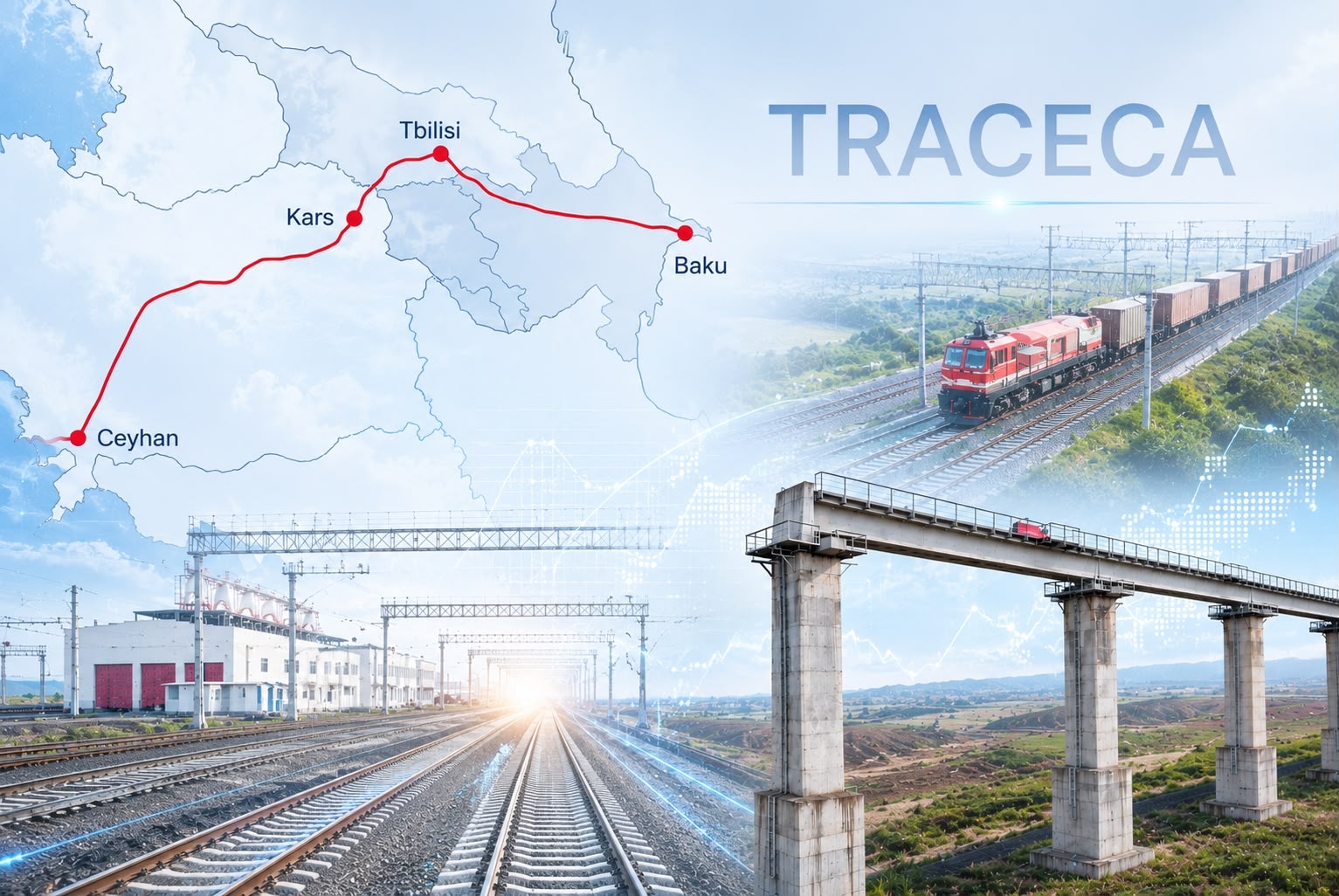
A New Stage for the Middle Corridor
2026-10-01
According to a new World Bank assessment, the development
of the Trans-Caspian Transport Corridor—also known as the Middle Corridor—could
boost Georgia’s economy by an additional 3.61% in the long term. However, the
report’s key message goes beyond mere infrastructure construction; transforming
the corridor into a fully functional economic route requires the integrated
operation of ports, railways, roads, customs services, and digital systems.
The new World Bank report, titled "Integration:
World-Class Trade Logistics Along the Trans-Caspian Transport Corridor,"
views the development of the Middle Corridor not merely as a transit route, but
as a significant driver of regional economic growth.
According to the report, with the implementation of
appropriate investments and reforms, trade volumes along the corridor could
increase substantially by 2040, while transit times could be drastically
reduced. The World Bank also assesses the region's economic impact, noting that
the development of the corridor could drive an average GDP growth of 3.3% in
the region and generate approximately 2 million additional jobs.
Impact on Georgia
For Georgia, World Bank modeling projects an additional 3.61%
in economic growth over the long term.
According to the same assessment, the development of the
Middle Corridor will also significantly impact employment, foreign trade, and
budget revenues. This forecast is particularly significant for Georgia, given
the country's location along the corridor's central section—the area connecting
the Caspian and Black Seas.
For comparison, the World Bank estimates that the
development of the Middle Corridor holds the potential for an additional
3.40% growth in Armenia's economy and 0.43% in Azerbaijan's economy over the
long term.
These figures do not represent a guaranteed forecast for
economic growth. They reflect the additional economic impact that could be
achieved if the relevant infrastructure investments, trade and transport
reforms, and international coordination are fully implemented.
What is the Middle Corridor?
The Trans-Caspian Transport Corridor—often referred to as
the Middle Corridor—connects Asia and Europe via Central Asia, the Caspian Sea,
the South Caucasus, and Turkey.
It is not merely a single railway or transport route. The
corridor comprises a combination of railways, maritime shipping, roads, and
logistics infrastructure that facilitates the movement of cargo from East
Asia to European markets.
A new World Bank report examines nine countries within the corridor region: Georgia, Azerbaijan, Armenia, Kazakhstan, Kyrgyzstan, Tajikistan, Turkey, Turkmenistan, and Uzbekistan.
Nearly 200 million people live across the territories of
these countries. Consequently, the development of the corridor entails more
than just an increase in freight transit; its goal is to improve market access,
foster the emergence of new businesses, attract investment, and boost local
economic activity.
Why is Georgia’s role significant?
Georgia’s primary advantage is its geographical location.
The country is situated along the section of the Middle Corridor that connects
cargo from the Caspian Sea and Central Asia to the Black Sea, and subsequently
to European markets.
Both maritime infrastructure and railway connections
play a crucial role in this system.
According to Roland Price, the World Bank’s Regional
Director, Georgia’s economy will benefit not only from increased transit
volumes but also from growth in employment, trade, and associated budget
revenues.
World Bank transport specialists also highlight Georgia’s
strategic importance regarding its access to the Black Sea and its railway
connection with Turkey. The smooth operation of these two components is crucial
for enabling the corridor to handle the increased flow of cargo moving from the
East toward Europe.
Anaklia, Poti, and the Railway: The Key Challenge Beyond
Infrastructure
Discussions regarding the Middle Corridor often focus on
ports, railways, and roads. However, a new World Bank report highlights another
critical issue: infrastructure alone is insufficient if the corridor does
not function as an integrated system.
Customs procedures need to be simplified, documentation
requirements reduced, and digital systems adopted to ensure the seamless
movement of cargo from one country to another without unnecessary delays.
According to the World Bank, enhancing the corridor's
competitiveness requires stronger coordination among countries and transport
operators, better connectivity between logistics hubs, and improved service
reliability.
In the case of Georgia, particular attention in this context
is focused on the Anaklia deep-sea port, the capabilities of the Poti port, and
railway infrastructure. According to World Bank representatives, the projects
currently underway or planned in these areas are crucial for the corridor's
future throughput capacity.
However, the key issue is no longer just the volume of
cargo—measured in tons—that a specific port or railway can handle; what matters
is the speed and predictability of cargo movement along the entire route.
The Need for Billions in Investment Through 2040
A new World Bank report indicates that fully developing the
Middle Corridor will require more than $25 billion in investment in physical
infrastructure by 2040.
The primary areas of focus are railways, seaports, and the
connecting roads.
In addition, approximately another $30 billion in
so-called supportive nvestments
are needed to facilitate this - including in logistics hubs, inland terminals, connecting
transport infrastructure, cargo handling equipment, and digital systems.
These figures demonstrate that developing the Middle
Corridor entails more than just launching one or a few infrastructure projects;
it involves creating a multi-year, region-wide transport and economic system.
A Key Shift: From a Mere "Route" to an Economic
Platform
This is precisely one of the key messages of the World Bank
report: the ultimate goal of the Middle Corridor should not be limited to
simply moving cargo from one point to another.
A well-functioning corridor can serve as a platform that,
alongside transit operations, fosters the development of logistics,
manufacturing, trade, services, and new investments in the countries along
the route.
For Georgia, this means that the economic impact of
strengthening its transit role should not be limited solely to the revenues of
transport companies. If logistics centers, warehouses, processing plants, and
other related services are established along the corridor, the growth in
transit could extend to broader economic sectors.
What needs to change within the system?
The World Bank identifies several areas for improving the
corridor's efficiency. These include creating a unified digital system to
streamline the exchange of transport and trade data; better integrating rail
and maritime shipping; strengthening coordination across the entire corridor;
and improving the management and financial sustainability of transport
operators.
It is precisely here that the main challenge for the next
stage of the Middle Corridor may lie.
If one country’s infrastructure allows for rapid movement
but crossing the border into a neighboring country is time-consuming, the speed
of the entire route will ultimately be determined by its slowest segment.
Therefore, the corridor's competitiveness will depend less
on the sum of individual countries' successes and more on the efficiency of
the unified regional system.
What does this mean for Georgia's economy?
A projected additional economic impact of 3.61% is a
significant figure for Georgia, though its realization will not happen
automatically.
World Bank modeling directly links the anticipated benefits
to infrastructure investments and improvements in the efficiency of trade and
transport systems. Consequently, for Georgia, the issue goes beyond merely
constructing a new port, railway, or road.
Achieving the ultimate outcome requires the effective
integration of the Georgian section with the transport systems of Azerbaijan,
Central Asia, Turkey, and Europe.
If this integration is successfully implemented, the growth
of the Middle Corridor could mean not only increased cargo transit for Georgia
but also the expansion of logistics services, the attraction of investment,
job creation, and the diversification of economic activity.
The new World Bank report examines this outlook through
2040. Its key message for Georgia is precisely that geographical advantage
alone is insufficient; it transforms into a competitive economic advantage only
when the entire corridor operates rapidly, reliably, and under unified rules.
Consequently, the future of the Middle Corridor will not be measured solely by transit volumes. The pivotal question will be the extent to which Georgia can transform its transit location into broader economic opportunities—specifically, into a regional logistics, trade, and investment hub.
Sources:
worldbank.org / akhla.online / bpn.ge / bm.ge