News
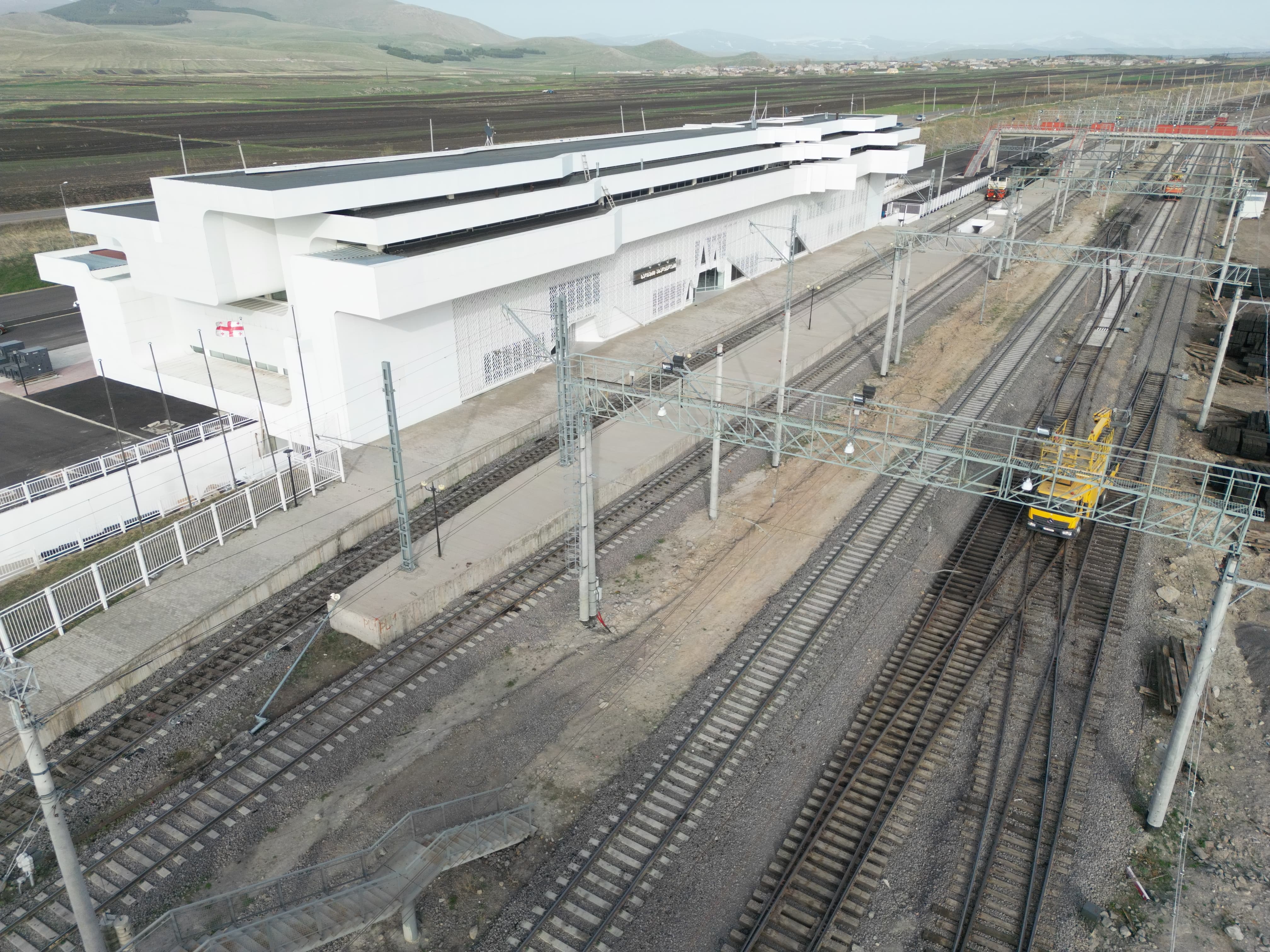
Baku-Tbilisi-Kars Highway and the Self-Declared Abkhazian Railway
2026-04-15
The self-declared Abkhazian Railway and the
Ochamchire Port can be presented as a competing transport corridor only in the
context of Russian cargo transportation. The Transport Corridor Research Center
publishes analytical material on this.
As is known, an interview with the head of
the container terminal in Ochamchire was published on social networks, the
title of which is - "The transit route through Abkhazia may compete with
the Baku-Tbilisi-Kars corridor".
“We are, to some extent, an alternative to
Baku-Tbilisi-Kars and are competing with this route. This year, the Ochamchire
container terminal will reach its design capacity and will be fully
operational. Naturally, under such conditions, part of the cargo flows will be
transferred from the Baku-Tbilisi-Kars railway to the Abkhazian route,” the
head of the Ochamchire container terminal said in an interview.
In addition, on April 4 of this year,
during the roundtable discussion of the self-proclaimed Abkhazia International
Economic Forum “Abkhazia - Investments of the Future”, it was stated that “the
readiness of the container terminal infrastructure at the Ochamchire port, as
well as the restoration of rail traffic and the export of Russian products from
the Ochamchire port to third countries, will enable Abkhazia to become an
important logistics center in the Caucasus.”
As the Transport Corridor Research Center
writes, when self-proclaimed Abkhazia focuses on competing with the
Baku-Tbilisi-Kars highway, it primarily means delivering cargo from the central
regions of Russia by rail to Ochamchire and then using the Ochamchire container
terminal to the western part of Turkey.
To the question - what competitive
advantage can the transport corridor through the self-proclaimed Abkhazian
railway and the Ochamchire port have in transporting goods in the western part
of Turkey compared to the Baku-Tbilisi-Kars highway? The Transport Corridor
Research Center explains:
“In such conditions, when the cargo is of
Russian origin, the self-proclaimed Abkhazia corridor can be selected without
hindrance only on the basis of a political decision, that is, the decision will
be made solely on the basis of political expediency, and not on any logistical
or economic calculations.
It is difficult to imagine that the
self-proclaimed Abkhazian railway will be able to compete with the newly built,
modernly equipped Baku-Tbilisi-Kars highway.
Recent photos of the track works underway
on the Ochamchire railway section clearly indicate that instead of the capital
repairs, which were last carried out in 1970, today only simple track works are
being carried out to restore the track.
Under such conditions, the speed of train
movement is limited to 25-30 km/h. Therefore, it is difficult to imagine
maintaining the necessary safety conditions for the transport corridor.
In addition, if The operation of the corridor is not based on a political decision; it is unacceptable for any foreign cargo owner and transport company, except for Russia, to send cargo on a railway section where, in the event of damage to the wagon or cargo, the body responsible for transportation in a legally unrecognized space is not documented.
For your information, the self-proclaimed
Abkhazian Railway is not on the board of any railway organization.
Naturally, the use of the self-proclaimed
Abkhazian Railway as a transit corridor by companies from other countries,
except for Russian cargo owners, is impossible due to logistical,
infrastructural and legal restrictions.
Presenting the self-proclaimed Abkhazian
Railway and the Ochamchire port as a single functioning transport corridor and
naming it as an alternative to the Baku-Tbilisi-Kars highway is undoubtedly an
exaggeration.
The self-proclaimed The competitive advantage of the joint corridor of the Abkhazian railway and the Ochamchire port over the Baku-Tbilisi-Kars highway is only apparent on the basis of the political decision to carry out cargo belonging to Russia,” we read in the TCRC material.
bpn.ge