News
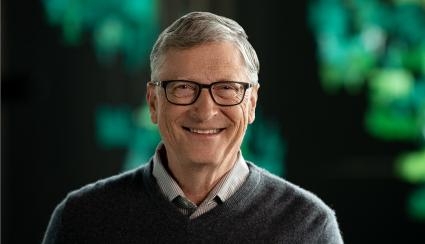
Bill Gates talks about the dangers of artificial intelligence
2026-08-26
Bill Gates, former Microsoft CEO and philanthropist,
discusses the pace of AI development and the risks it poses. In an interview
with MIT Technology Review, he discusses the limits the tech industry has
already crossed and highlights the specific regulations that are needed to
manage this process.
Gates believes that the tech industry has reached a point
where AI can cause real harm, but the appropriate safeguards are not yet in
place. “We’ve already crossed the threshold in terms of bio-capabilities,
cyber-capabilities, psychosocial capabilities, labor market disruption, and
even lack of control… I’m just amazed at the lack of interest and discussion
outside the industry.”
His criticisms are mainly directed at bioterrorism,
cyberattacks, and changes in the labor market. Gates believes that the ability
to generate new molecules increases the risk of bioterrorism by 50 times
compared to a natural pandemic, which is why such models should be strictly
controlled. Technology also allows even non-technical people to carry out
complex cyberattacks. Regarding the labor market, Gates notes that due to the
low cost and high accuracy of AI, a large part of office jobs are at high risk
of replacement.
To manage the existing risks, Bill Gates offers several
approaches:
First of all, he is considering a special tax on robots and
tokens, which will be imposed on companies that replace human labor with
artificial intelligence. The collected money should be used for social
assistance programs for people who remain unemployed.
The second initiative involves the so-called "reserved
for people" professions. In his opinion, certain activities, such as
caring for children, patient interaction in healthcare, or pedagogy, should
only be performed by humans. In addition, Gates considers global cooperation to
be essential for the prevention of threats, since he considers self-regulation
of the industry to be insufficient. In his opinion, the US and China should
jointly establish regulations, for example, in the direction of biomonitoring.
Although Gates also sees the positive sides of AI and believes that the technology will improve healthcare and agriculture, he notes that the next 10-20 years will be a rather difficult transition period. “Yes, I am an imperfect messenger… It is rare for a person enriched by technology to attack innovations like this. But if the right policies and protective mechanisms are not introduced, this will be a net negative for humanity.”
Source: marketer.ge