News
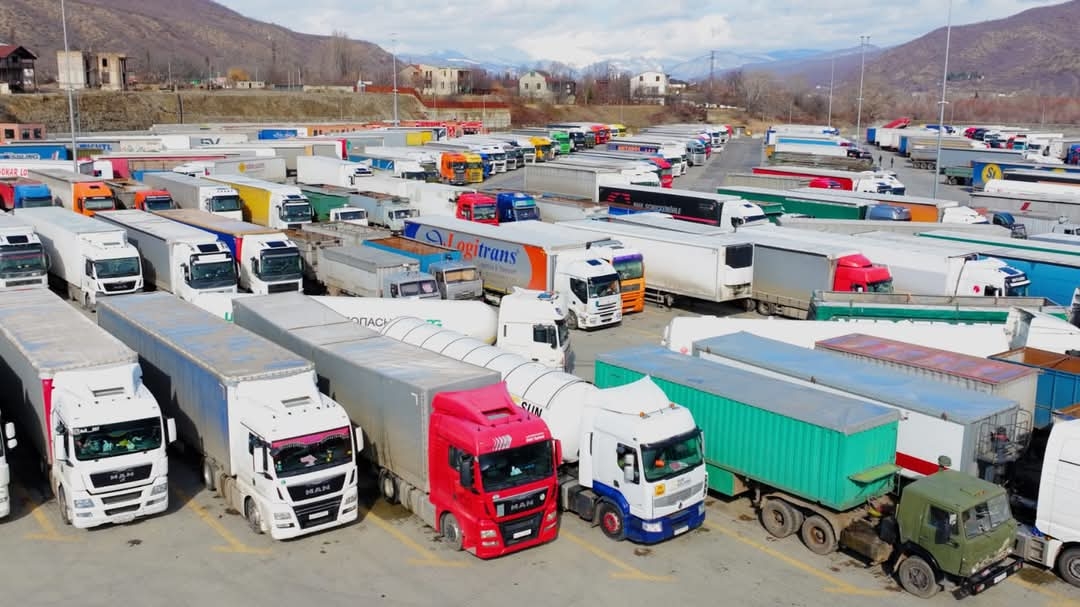
Challenges of Safe Truck Parking
2025-04-10
On Georgian roads, you will often encounter
a line of trucks parked on the side of the road. Such lines often cause
disruption to light vehicle traffic, limited visibility, increased fuel
consumption and air pollution - and in combination, trucks piled up on road
sections lead to emergency situations.
To solve the problem, it is necessary to
have a pre-approved scheme for the placement of truck parking areas in the
country. Based on the pre-established parking spaces, investment proposals
should be offered to private businesses, which is a widespread model for the
development of parking spaces in Europe.
Moreover, Georgia will be obliged in the
near future to introduce and fully implement the EU-approved driver work and
rest monitoring system.
The monitoring system provides for the
vehicle to stop in the parking space at a certain interval after the expiration
of the connected traffic time and continue the movement only after a rest. For
this purpose, it is necessary to create parking spaces for freight transport on
the country's highways.
Naturally, in such a situation, the
question arises: is there a scheme for the placement of parking areas developed
in advance by the state? Or when is it planned to arrange certified parking
areas for drivers on the East-West highway? In the absence of such parking
areas, how justified would it be to require drivers to comply with the work and
rest regime established by law? What standards for parking areas exist in the
EU countries? Who should certify parking spaces? What problems do international
carriers face in protected and unprotected parking areas?
Another important detail that road carriers should
take into account is that due to the lack of parking areas on the territory of
Georgia, the carrier
violates the rules of monitoring work and rest, and in
the event of entering the European space, he can easily be fined by the
transport police for violating the rules of work and rest during transportation
on the territory of Georgia.
The Transport Corridor Research Center
offers an assessment of this issue.
Currently, only one parking lot for trucks
- Trucks Parking Central - operates in the Mtskheta municipality in Georgia.
The parking infrastructure was expanded in
2024 and is designed for 1,150 trucks. This intermediate parking lot is the
only one in Georgia.
In 2024, Trucks Parking Central transported
150,000 vehicles. The parking terminal is mainly oriented towards the
transportation of vehicles in the direction of Larsi. Due to meteorological
conditions, the movement of trucks on the Kobi-Gudauri road is often restricted
and traffic jams are formed.
In this sense, the parking area is an
intermediate waiting area where it is possible to accumulate vehicles and then
send them in a packaged form.
The company "LG Trans" has
invested 14 million GEL in the expansion of the parking area and plans to
invest an additional 2 million GEL in 2025.
The Trucks Parking Central intended for
trucks is a space arranged in accordance with modern standards. Naturally, only
one parking space, even with an intermediate function, is not enough on the
territory of Georgia.
It should be noted that the shortage of
parking spaces is not only Georgia’s issue; a similar problem is observed in
the European Union.
In March 2025, the European Union developed
new standards and procedures to support the development of a safe and secure
truck parking network. According to a recent EU report, there is a serious
shortage of safe and secure truck park areas (SSTPA) in European countries.
Experts believe that despite increased
investment in parking infrastructure, the shortage of parking spaces is likely
to persist until 2040.
Although SSTPA standards have already been
implemented in several pilot parking areas, including Béziers in southern
France, Barcelona in Spain and Lugoi in Romania, the EU, together with the
International Automobile Union IRU and the German technical expert society
DEKRA, is developing new SSTPA parking standards.
The latest EU report highlights the
following key challenges:
According to the IRU, the annual loss
caused by cargo theft in Europe is €6-7 billion.
The security of parked vehicles is a
serious concern for transport companies and drivers. 85% of transport companies
are victims of theft and vandalism in unsecured parking lots.
In secured parking lots, this figure has
dropped to 41%, which indicates the need to strengthen security measures.
Theft of cargo, including fuel, is
widespread, as well as illegal entry into semi-trailers by third-country
nationals. Cases of armed robbery are frequent, which threatens the lives of
drivers.
Another series of truck robberies occurred
in parking lots in Germany. 7 trucks were damaged.
On March 18, a Dutch truck driver reported
that his vehicle was attacked by unknown assailants and goods were stolen. He
parked his truck on March 17 at the Willrodaer Forst parking lot on the A4
highway near Frankfurt. In the morning, the driver noticed that the sunroof was
broken. The value of the stolen goods was 4,400 euros.
On March 19, a truck was also attacked in
the Kuhberg parking lot, located near the A9 motorway near Berlin. In this
case, the attackers first damaged the tarpaulin in order to check the
semi-trailer for possible loot.
The uneven distribution of parking spaces
in the European Union exacerbates security problems. The shortage of parking
spaces is particularly acute in the peripheries of the European Union, where
there is heavy truck traffic. Many regions in Europe lack certified rest areas,
which hinders the creation of a safe environment for drivers. As a result,
illegal parking and risky stops have become a serious problem.
Finding safe and comfortable spaces is a
serious problem, so the difficulties drivers face has a negative impact on
traffic safety.
The EU initiative is to introduce an
electronic system for advance parking reservations.
The lack of infrastructure for intelligent
transport systems makes it difficult to find available spaces in many parking
lots in high-traffic areas.
The introduction of digital platforms for
reserving parking spaces and increasing the level of security in existing
parking lots will significantly improve the working conditions of drivers.
Despite the fact that the European Union
has adopted a special program for the development of the parking network,
investors are in no hurry to provide financing. Market participants fear that
the problem of a lack of parking spaces for drivers will not be solved.
One of the solutions for the development of
the parking network in European countries is the use of EU funds. In
particular, within the framework of the investment program adopted by the
European Commission, it is expected to create 60-70 thousand new parking spaces
in the next 5-7 years, the cost of which will be 1.5 billion euros.
The European Commission plans to allocate significant funds to modernize and improve safety in parking lots. A total of 178 million euros will be transferred to companies that decide to create safe truck parking areas according to the SSTPA standard. The introduction of a neutral monitoring and certification system for rest areas is crucial for the successful implementation of the SSTPA standard.
Info: transcor.ge