News
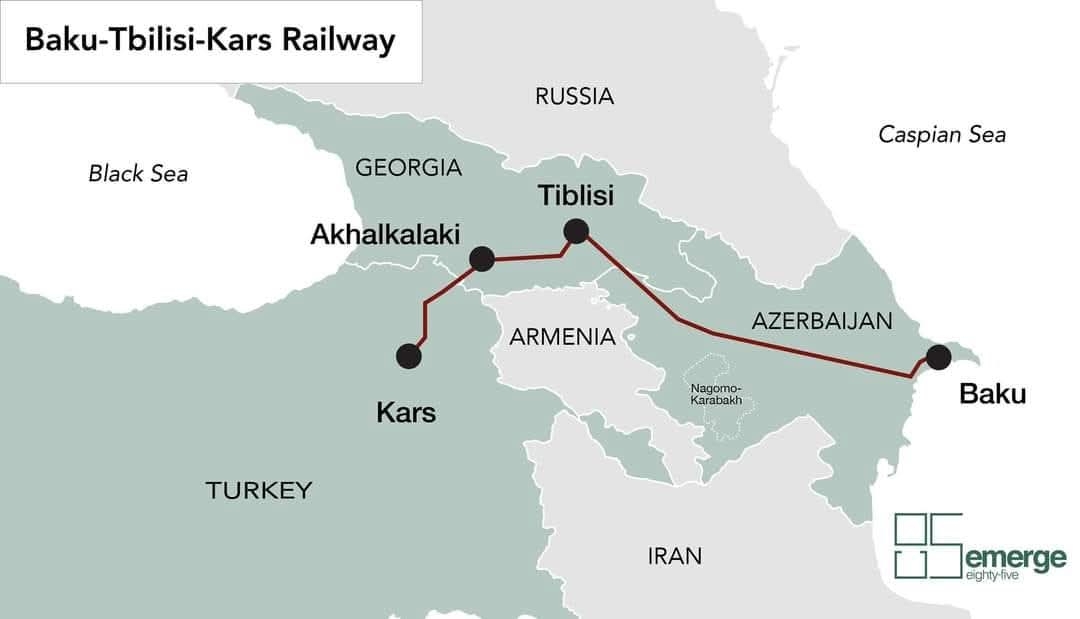
Economic Efficiency of the Marabda–Kartsakhi Railway
2026-10-27
According to an assessment by the Transport Corridor
Research Center (TCRC), the Marabda–Kartsakhi section faces challenges
regarding economic efficiency due to low cargo turnover and significant
financial obligations. Between January and September 2026, 155,000 tons of
cargo were transported along this section—just 3.1% of its annual design
capacity (5 million tons). Since 2019, the highest volume was recorded in 2021,
reaching 483,000 tons.
Based on the financial statements of Georgian Railway,
revenue generated from the Baku–Tbilisi–Kars route stood at 9.5 million GEL in
2021, 8 million GEL in 2022, and 1.7 million GEL in 2023, before declining to 1
million GEL in 2024. In 2025, the figure rose to 5.3 million GEL; however, the
Center estimates that this remains insufficient to cover the project's
financial obligations. The total volume of loans associated with the project
amounts to $775 million: a $575 million loan carries an annual interest rate of
5%, while a $200 million loan carries a rate of 1%. Annual interest expenses
reach approximately $31 million. According to the Center’s calculations,
assuming an operating margin of about $6 per ton of cargo, approximately 5.1
million tons of cargo would need to be transported annually just to cover the
interest—a figure nearly equal to the section's design capacity.
One of the primary challenges identified is the underutilization of the Akhalkalaki railway hub. Due to the difference in track gauge between the railway systems of Georgia and Turkey, it is necessary to replace the bogies (wheelsets) on railcars; this incurs additional costs and hinders the attraction of certain types of cargo. Furthermore, the Center reports that the relevant equipment is not being fully utilized, and the tariff policy of Georgian Railway lacks a specific rate for the bogie-replacement process. According to TCRC’s assessment, improving the financial sustainability of this section requires attracting additional cargo flows, making fuller use of infrastructure capacity, and enhancing the operation of the Akhalkalaki hub. Otherwise, the fulfillment of debt obligations may become dependent on external financial support or debt restructuring. Ultimately, the competitiveness of this section of the Middle Corridor will depend on cargo volumes, tariff conditions, and transit speed.
Source: commersant.ge