News
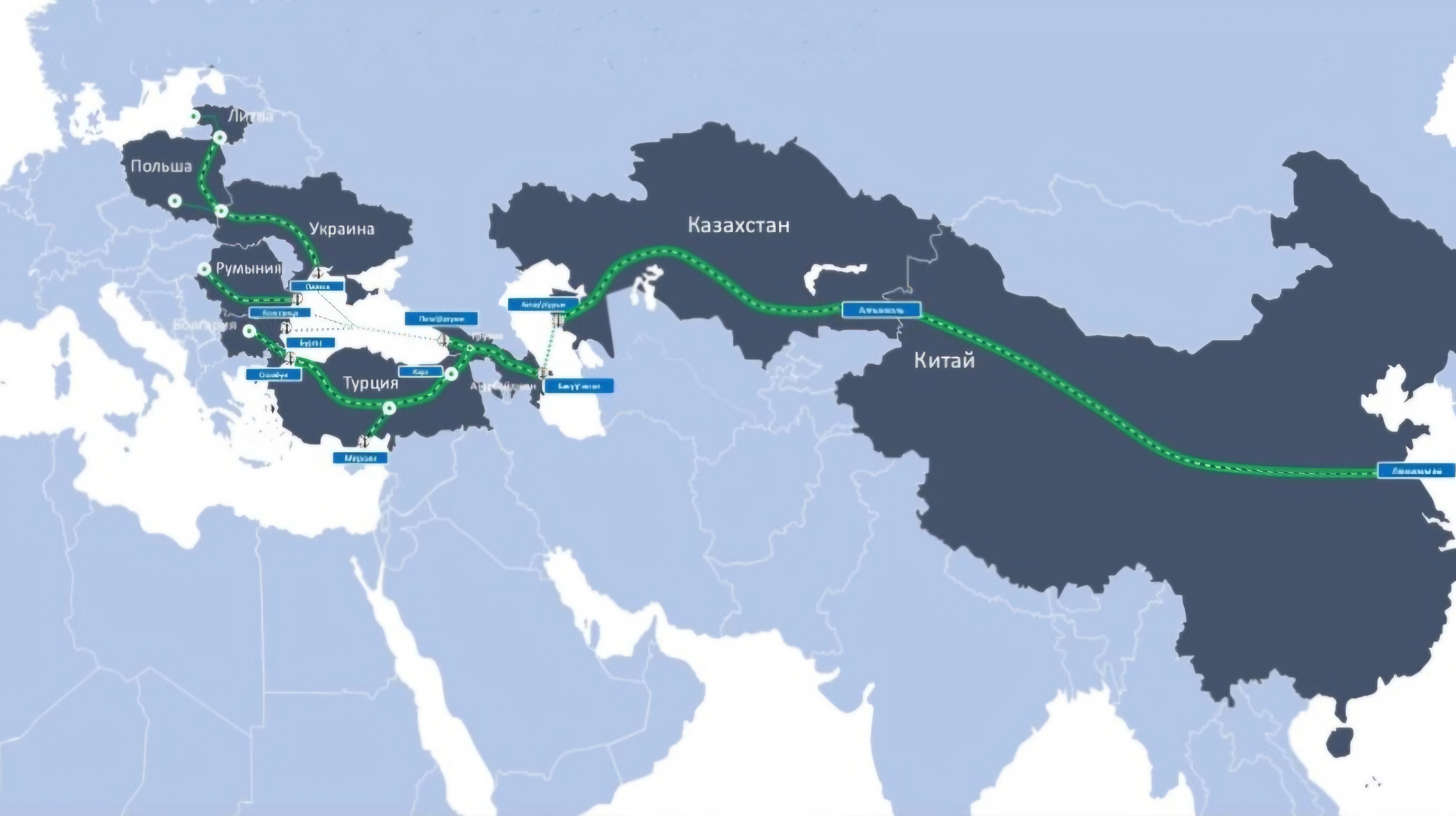
EPRC Study on Georgia`s Transit Risks
2026-08-18
According to a new report by the Economic Policy Research
Center (EPRC), Georgia, which for decades was considered an undisputed transit
hub connecting East and West, is facing serious geoeconomic challenges.
The study shows that against the backdrop of a domestic
political crisis, deteriorating relations with the West, and infrastructure
disruptions, the country could transform from a regional corridor into a
“bottleneck” and a risk-bearing zone.
Alternative Routes and Projects Bypassing Georgia
According to the report, international partners, the US and
the EU, have begun active work on creating a new transport architecture in the
South Caucasus that bypasses Georgia:
TRIPP Corridor: The US-brokered agreement between
Azerbaijan and Armenia (Trump Route for International Peace and Prosperity)
envisages the construction of a transport and energy corridor through Armenia
(on the Meghri section). The project is scheduled for completion by 2028 and
will reduce freight transport time to Turkey by 25%, which will directly
compete with the Baku-Tbilisi-Kars railway.
EU strategic move: High-level visits by European
Commission officials to Baku and Yerevan (bypassing Tbilisi) confirmed that
Brussels is ready to finance the reconstruction of the Nakhichevan railway and
Armenia’s transit infrastructure, so that Eurasian trade flows do not rely on
politically unstable Georgia.
Domestic infrastructure bottlenecks and Anaklia
The EPRC study highlights that despite growing demand for
the Trans-Caspian Route, Georgia is failing to fully exploit its logistical
potential:
Anaklia port crisis: Construction of a deep-sea port
has been stalled for years. After the collapse of negotiations with the Chinese
consortium, the government switched to the “Landlord Port” model, where the
infrastructure is owned by the state, although this change exposed the budget
to the risk of incurring an additional $200 million in foreign debt.
Overcrowding of existing ports: The ports of Poti and
Batumi are operating at maximum capacity, but due to the shallow water depth,
they cannot accept large (Panamax-type) ships, which increases the cost and
hinders the transit of cargo.
Economic dependence on Russia and the freezing of Western
financing
The study analyzes in detail the change in Georgia’s
economic vector. According to 2026 data, dependence on Russia is still at a
high level — the Russian share in the import of petroleum products, liquefied
natural gas and natural gas has increased significantly, and the number of
Russian companies registered in the country has exceeded 46,000.
In addition, due to democratic backsliding and anti-Western
rhetoric, the European Union and Germany have frozen hundreds of millions of
euros in budgetary and infrastructure aid.
According to the EPRC, if Georgia fails to quickly restore its strategic partnership with the West and ensure a transparent, secure transit environment, the country will ultimately lose its historical function and find itself in regional economic isolation.
bm.ge