News
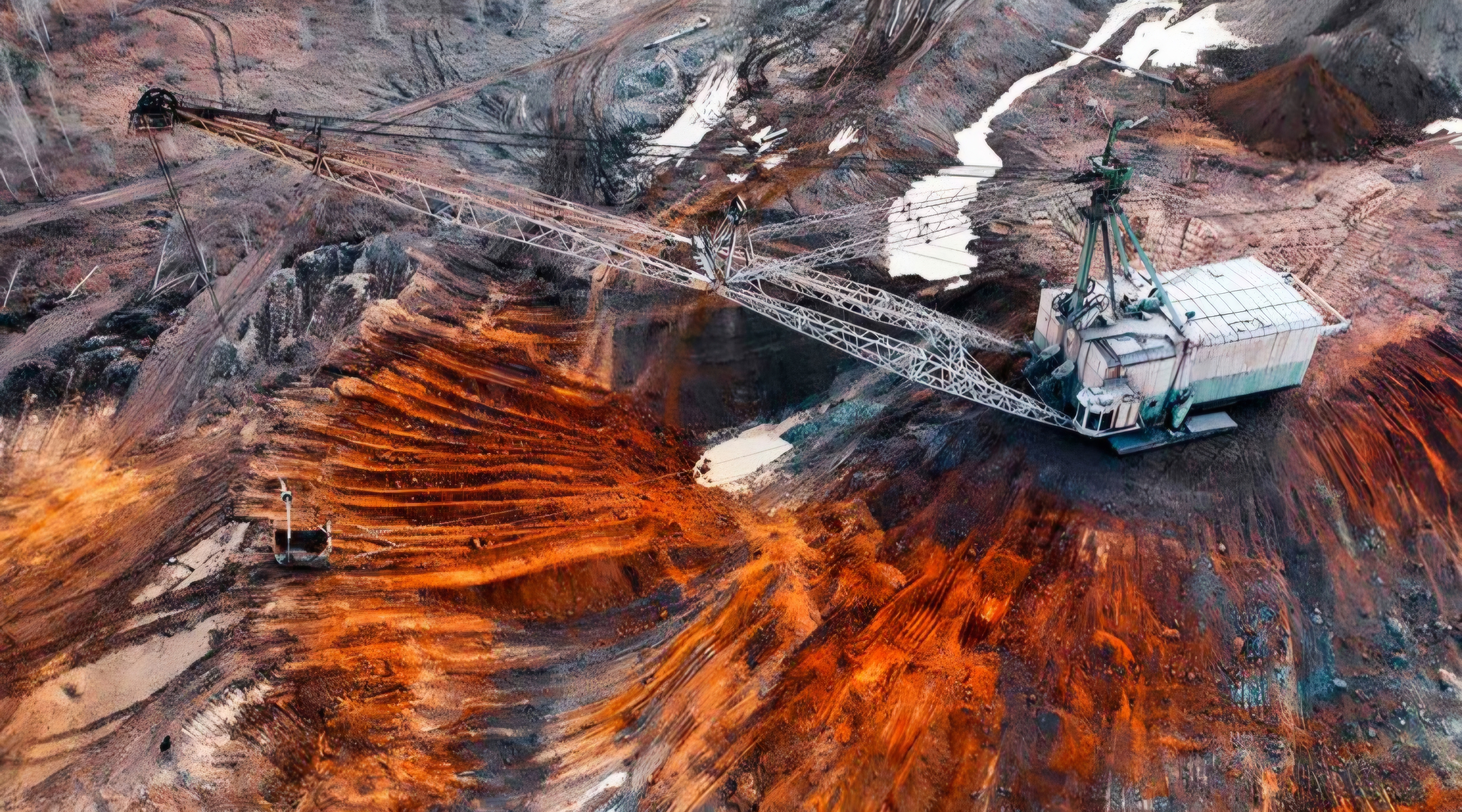
EU plans to transport critical raw materials via the Middle Corridor – TCRC
2026-04-09
The transportation of modern equipment
needed to extract raw materials that are critical to the EU will be possible
using Georgian ports - this is stated in the publication of the “Transport
Corridor Research Center” (TCRC).
“The EU gives priority to the Middle
Corridor when transporting critical raw materials from Central Asia
For the extraction of raw materials that
are critical to the EU in Central Asia, both modern equipment and technologies,
as well as “reverse” finished products, will be possible using Georgian ports -
under such conditions, the role of the Middle Corridor will significantly
increase.
Recently, the EU has shown increased
interest in the critical resources of Central Asia. Experts believe that such
an aspiration of the European Union represents an opportunity for investment
and technological development for the countries of the region, however, at the
same time, geopolitical risks for the countries of Central Asia are
increasing,” the publication notes.
As TCRC writes, in the context of
critically important raw materials, Central Asia has come into the spotlight
because the region has significant reserves of rare earth metals and strategic
minerals for the production of microchips, turbines, smartphones, electric
vehicles and renewable energy equipment necessary for the EU.
“Experts note that many deposits of
critically important raw materials in Central Asia are still unexplored.
According to preliminary estimates, the five countries of the region together
have manganese ore (38.6% of world reserves), chromium (31%), lead (20%), zinc
(12.6%), titanium (8.7%), There are significant reserves of zinc (2.6%), as
well as copper, cobalt and molybdenum. The region also has significant
potential for rare earth metals such as scandium, yttrium and lanthanides.
According to the US Geological Survey
(USGS), 384 deposits of rare earth metals and strategic minerals have been
discovered in the region, including 160 in Kazakhstan, 87 in Uzbekistan, 75 in
Kyrgyzstan, 60 in Tajikistan and 2 in Turkmenistan.
Currently, the European Union is almost
entirely dependent on imports of strategic minerals and rare earth metals from
China.
At the same time, experts agree that the
main risk for the Central Asian region is the lack of raw material supplies
from major economic centers (USA, China) is transformation.
Central Asia should not be limited to the
export of strategic minerals, they should not miss the opportunity to create
high-value-added technologies in their countries.
China controls 60% of the world's rare
earth mining enterprises and 90% of the world's processing capacity, which
creates a certain vulnerability for the EU's high-tech industries.
Since the beginning of 2024, China has imposed restrictions on the export of a number of minerals and related technologies, which has increased strategic risks for the EU.
Kazakhstan stands out in the regional
context. It can offer the EU 21 of the 34 critical minerals and metals
considered strategic by Brussels.
Kazakhstan already produces 34 of the 34
key minerals considered strategic by the EU 19. It has the world's largest
reserves of chromite, significant reserves of titanium, barite, silver, lead
and chromium, as well as significant deposits of copper and uranium.
In the processing of rare metals, in
addition to Kazakhstan and Uzbekistan, the EU's focus on Tajikistan, Kyrgyzstan
and Turkmenistan will also strengthen its position in creating a balance of
power against the Chinese monopoly.
It is important to note that the Central
Asian countries actively support the EU's strategic vision, so that the EU is
not only interested in purchasing raw materials, but is also oriented towards
the development of local processing, infrastructure, transportation, technology
transfer and educational programs.
Many Central Asian companies and experts
note that European businesses need to act faster in the region, as competitors
The USA, China, Japan and South Korea are already actively developing new
deposits and creating production chains.
The main task of Brussels is to quickly
respond to the processes, offer competitive conditions to the countries of the
Central Asian region, as well as help strengthen technological potential,
infrastructure and human resources - this is not subject to delay.
Kazakhstan, for its part, stated that it is developing the infrastructure of the Trans-Caspian transport corridor in order to ensure the smooth and safe delivery of critically important raw materials to European markets,” the publication says.
bpn.ge