News
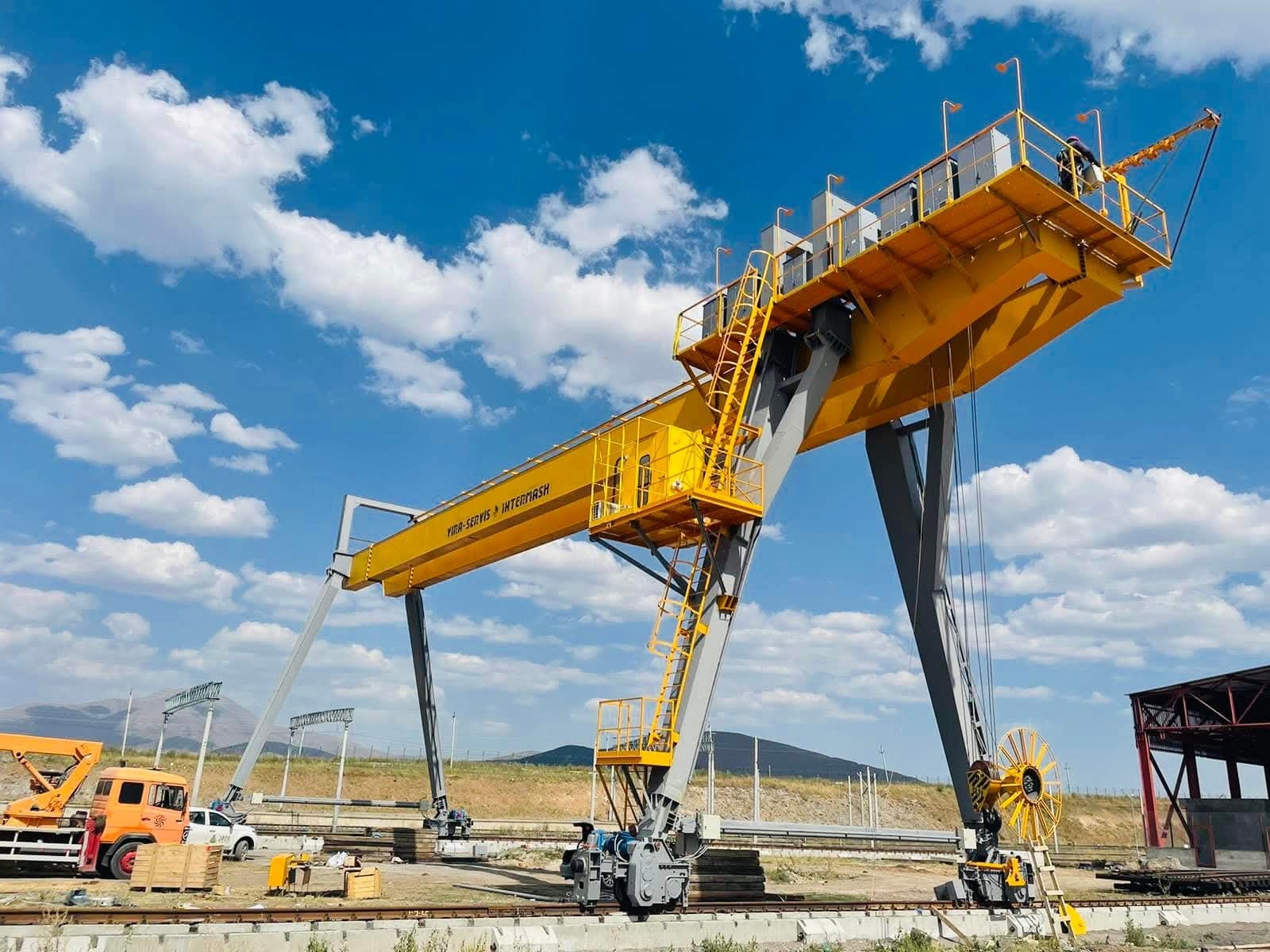
Pilot route for transportation via Akhalkalaki railway junction launched
2026-04-17
According to the Transport Corridor
Research Center, a pilot route for transportation via the Akhalkalaki railway
junction from Europe to Central Asia via the Middle Corridor has been launched.
According to them, as a result of the
introduction of tariff preferences by the TITR Association, 11 units of Swap
Body type railway wagon-platforms were sent from Belgium to Kyrgyzstan in early
April of this year using the Turkish Railways, then Baku-Tbilisi-Kars and the
Middle Corridor.
“The pilot shipment is actually a practical
implementation of an innovative logistics solution for both the Middle Corridor
and the Baku-Tbilisi-Kars section,” says Levan Lomsadze, founder and director
of GeoRail-Consulting.
TCRC explains that the pilot shipment was
carried out along a new logistics route - in particular, a freight train
consisting of 11 wagons (these wagons were included in a single freight train
with other wagons) departed from the Turkish Kyosekoy terminal near Istanbul.
After passing the Turkish railway, the body was reloaded from the European 1435
mm gauge to the 1520 mm standard wagon platform using a bridge crane in
Akhalkalaki.
The Transport Corridor Research Center
notes that the “Kyosekoy Terminal” near Istanbul is a powerful railway
logistics hub in Turkey, which is designed to form block trains in the
directions of Azerbaijan, Kazakhstan, Uzbekistan, Kyrgyzstan and China.
Unlike a classic container, a swap body is
a removable body equipped with folding/unfolding legs. It is less used for
direct transportation on a ship and is mainly adapted for rail + road
transportation.
“The innovative logistics solution for
transporting pilot components from Europe to Central Asia has practical results
for the middle corridor.
Georgia is becoming an active and strategic
player in intermodal transportation in the corridor, attracting new “reverse”
cargo flows from Europe to Central Asia.
At the local level, the commissioning of
the less busy Marabda-Kartsakhi section of the Baku-Tbilisi-Kars railway is
gaining relevance. In addition, the Akhalkalaki railway station is gaining
additional attractiveness and has the opportunity, together with a powerful
transshipment hub, to develop into a logistics center in the near future.
The commissioning of a new logistics route
contributes to improving connectivity between regions, and the demand for Swap
body carrier wagons is also increasing.
In addition, under the conditions of
innovative transportation, the operating speed of trains on the
Marabda-Kartsakhi section of the Baku-Tbilisi-Kars highway will increase, which
will coincide with the acceleration of reloading operations at the Akhalkalaki
junction and the synchronization of customs processes,” explains Levan
Lomsadze, Director of GeoRail-Consulting.
According to the assessment of the
Transport Corridor Research Center, the imbalance of cargo flow movement is
currently considered an insurmountable problem of the Middle Corridor, in
particular, the volume of cargo flows from Europe to Asia through the Middle
Corridor significantly lags behind the volume of shipments from Asia to Europe.
In fact, there is an acute shortage of “reverse” cargo from Europe to Asia on
the Europe-Asia-Europe transport axis.
“In the conditions of asymmetric
transportation of cargo flows in the direction of Europe - Asia - Europe using
the Middle Corridor, most of the loaded containers return empty to their
destination via the land route after unloading, which significantly increases
transportation costs and reduces the competitiveness of the Middle Corridor
compared to other alternative routes.
According to data from 2025, the number of
containers loaded on the Caspian Sea from Aktau to Baku was 2.5 times higher
than container shipments from Baku to Aktau. Such a ratio indicates the
imbalance of transportation and the lack of a “reverse” flow from the European
part.
For comparison, in 2025, for the first time
in the last 15 years, the number of container block trains from Europe to China
using the Northern Corridor passing through Russia exceeded the number of block
trains from China to Europe.
The existence of a reverse flow in the
northern direction is important for any corridor, first of all, to increase the
profit margin of transportation and, if necessary, to implement tariff
discounts.
It was precisely the elimination of the
existing imbalance that led to the decision taken in March 2026 by the
Trans-Caspian International Transport Route (TITR) Association on additional
tariff preferences for container shipments from the European part to the East.
In particular, the countries of the Middle
Corridor agreed to apply a 50% discount on containers loaded from the ports of
Batumi and Poti to Kazakhstan and China.
Similarly, a 33% discount was applied to
containers loaded from Turkey to Kazakhstan, China and Central Asian countries
via Kazakhstan.
Naturally, the purpose of the decision taken by the TITR Association was to stimulate container shipments from Europe to Asia via the Middle Corridor and eliminate the existing “imbalance”, - the information released by TCRC is noted.
bm.ge