News
Silk Road Spring with Three Important Updates
2025-05-07
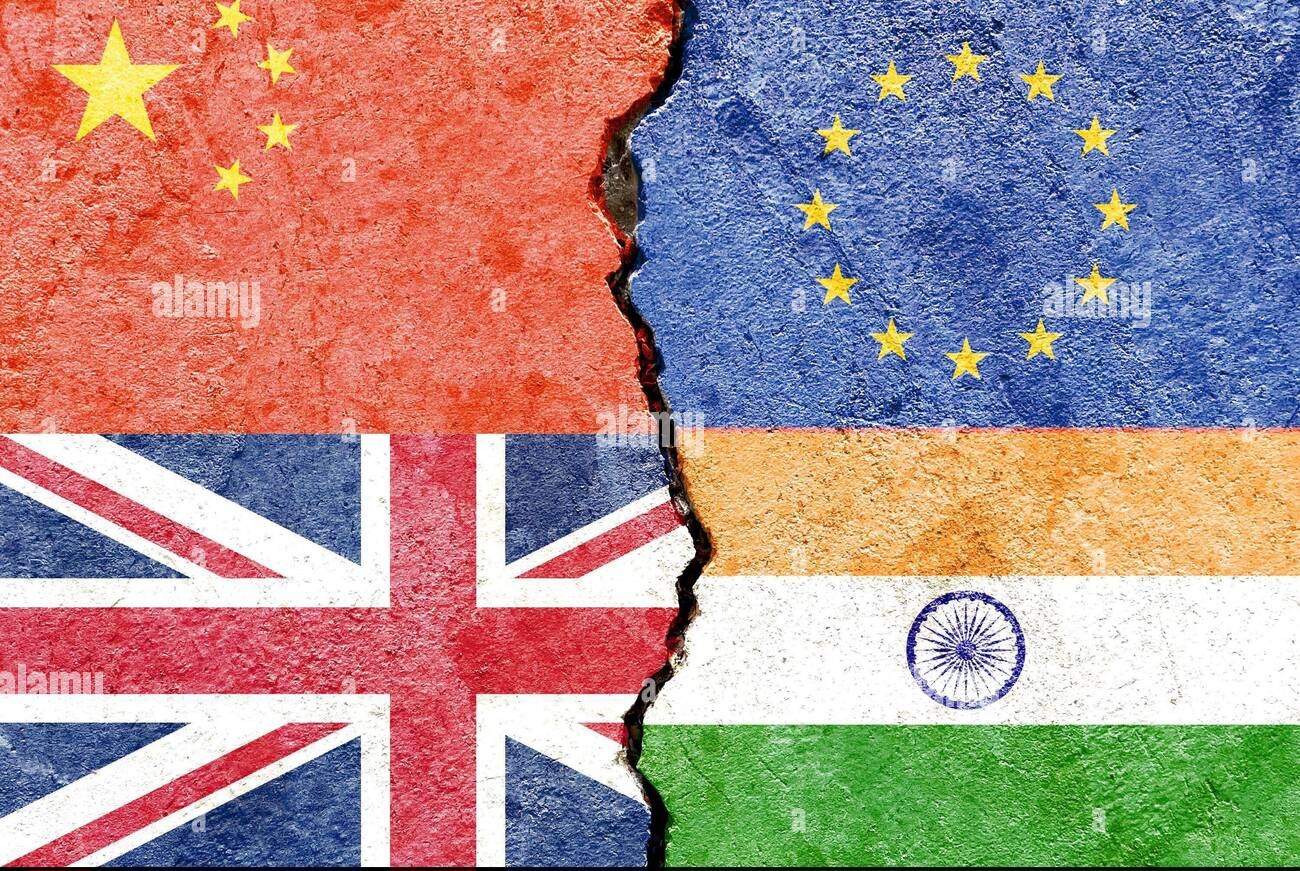
In early May, Britain and India reached a trade deal after three years of negotiations. The trade deal will make it easier for British companies to export whisky, cars and other products to India and will reduce taxes on Indian clothing and footwear exports. British Prime Minister Keir Starmer said the deal would boost the economy and “benefit the British people and businesses.” Indian Prime Minister Narendra Modi called the deal historic, ambitious and mutually beneficial.
At the same time, China and the European
Parliament agreed to comprehensively lift restrictions on bilateral contracts,
Chinese media reported, citing a representative of the country’s foreign
ministry. It is important for both sides that dialogue and cooperation between
China and the EU be strengthened.
Back in late February, the EU and India
reached an agreement under which work on a free trade pact between the two
countries will be completed this year. This became known after the visit of the
President of the European Commission, Ursula von der Leyen, to India. Brussels
and New Delhi discussed the main areas where close cooperation between the two
sides is possible within the framework of the strategic partnership. According
to von der Leyen, the EU expects an "ambitious" trade and investment
agreement, which will cover, for example, pharmaceuticals, as well as defense
and other industries. Negotiations on a trade agreement between India and the
EU have been resumed since 2021, after an 8-year pause. The EU is the largest
importer of Indian products. Two-way trade has grown by 90% over the decade,
reaching $137.5 billion in fiscal year 2023/24. The EU wants India to reduce
tariffs on car imports, while India is seeking to make its low-cost medicines
more easily available in the EU market. India also wants the EU to reduce
tariffs on exports of textiles and leather goods. Both sides say reaching an
agreement will not be easy, but they hope to conclude the talks by the end of
the year.
As the news above shows, cooperation in
investment and trade will be strengthened - between the UK and India, between
India and the EU, and between the EU and China.
The announced economic relations themselves require the promotion of such global projects as the Middle Corridor, the Southwest Corridor, the VIKINGTRAIN, CASCA and CAREC routes, TRACECA and the Eastern Partnership. In the new order of continental trade, it is a challenge for Georgia, as an EU aspirant country, to fulfill the recommendations of the European Commission (9 reservations). For, for the smooth connection of the administrative economy of Asia and the free market of Europe, Georgia can successfully fulfill the function of the best mediator, the gateway.
Zurab Maghradze
Doctor of Business Administration
Source: commersant.ge; bm.ge; bm.ge