News
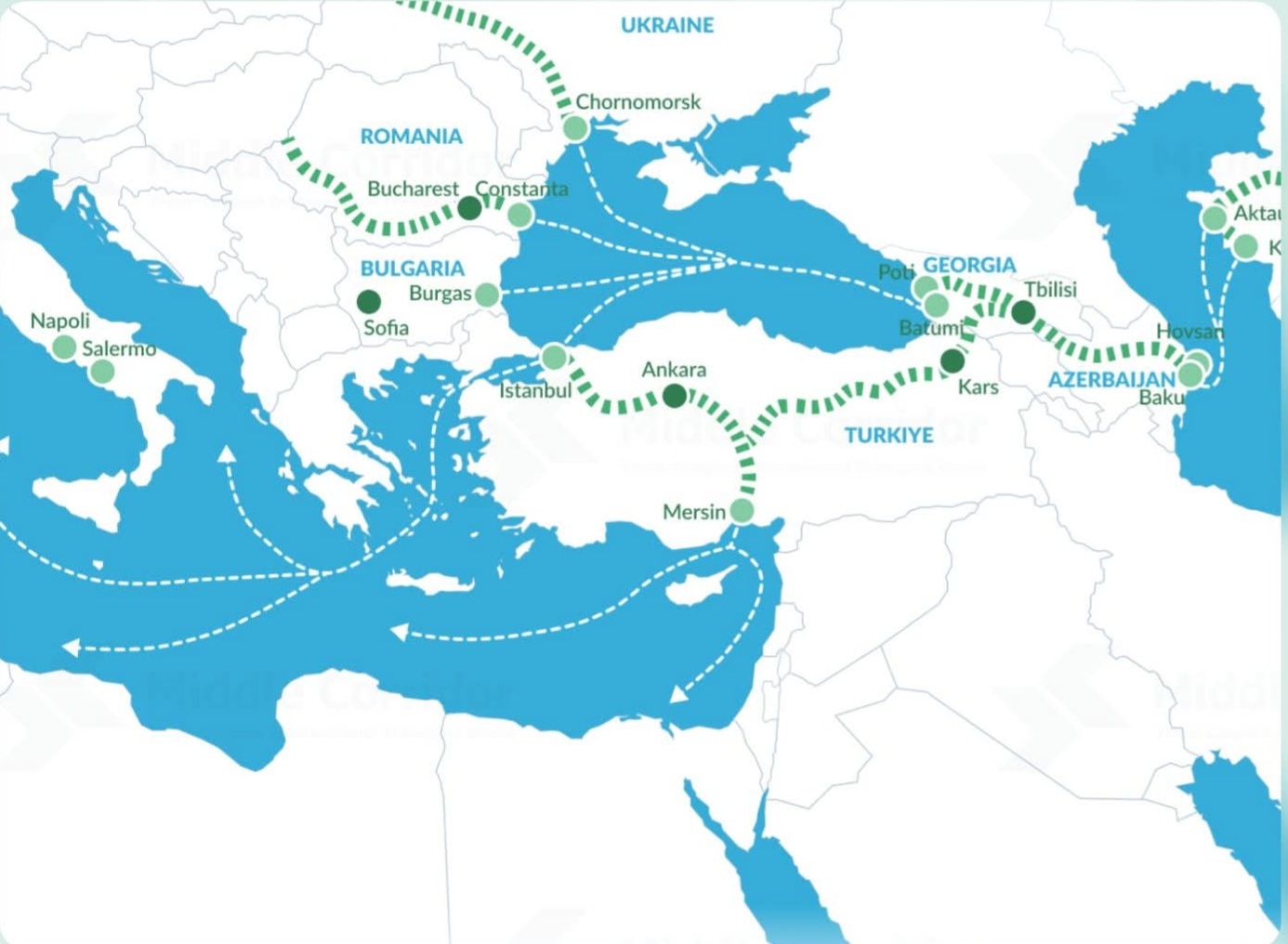
The Middle Corridor: What the European Commission Study Says
2026-02-10
Despite recent progress, the Trans-Caspian
Transport Corridor (TCTC) still faces operational obstacles, according to an
EU-funded meta-analysis. In particular,
Fragmented logistics;
Multiple border barriers;
Lack of digital development;
The European Commission published an
EU-funded meta-study on 6 February, highlighting the need for investment to
strengthen connectivity along the corridor. The study was authored by the EU’s
Directorate-General for Enlargement and Eastern Neighborhood Policy.
The study identifies key sections where
infrastructure is outdated or out of date. The findings provide a solid basis
for identifying investment priorities that are in line with the EU’s plans to
restore trade routes through the South Caucasus to Central Asia.
According to the study’s authors, the
practical guide will provide governments and the private sector with a clear
understanding of how they can contribute to building a modern and reliable
infrastructure. The meta-study is structured around three main pillars:
transport and trade, energy, and digital development.
“Given recent geopolitical developments in
the South Caucasus, the Middle Corridor could gain operational benefits by
creating branches through the South Caucasus, including by restoring
connections between Azerbaijan, Armenia, and Turkey. This could further
diversify trade routes and potentially ease congestion on congested sections,”
the study concludes.
The study also highlights the growing role
of Ukraine and Moldova in Europe’s efforts to diversify and strengthen its
extensive transport network.
According to the report, the World Bank
also identified key obstacles and investment needs that need to be addressed by
2030 to ensure the long-term viability of the corridor.
The study highlights that:
▪︎ The Black Sea region is of strategic
importance to the European Union. The region and its neighboring countries
serve as a gateway connecting Europe to Turkey, the South Caucasus, Central
Asia, and other regions.”
The reliability of the Northern Corridor is
decreasing, while the development of the Southern Route is slowing down.
In this situation, the Trans-Caspian
transport route is emerging as the most promising direction, providing a
sustainable, diverse and geopolitically resilient multimodal connection between
Europe and Asia.
The significant increase in freight flows
in the region and the agreement between Armenia and Azerbaijan on August 8
further strengthen the position of the Trans-Caspian route as the most optimal
way to ensure sustainable, diverse and reliable regional connectivity,” the
meta-analysis says. According to it, since 2022, trade on this route has
increased fourfold and, with the right investments, it can be tripled by 2030.
“When we talk about TCTC, the main actors
are: Kazakhstan, Azerbaijan, Georgia and Turkey — on the route from China to
Europe. However, Armenia, Uzbekistan, Kyrgyzstan, Moldova and Ukraine also have
an important role. Yerevan can help TCTC by creating new connections in the
South Caucasus, in particular by restoring the roads between Armenia,
Azerbaijan and Turkey. This will help diversify trade routes, relieve congested
sections and strengthen Armenia’s ties with the EU,” the meta-analysis says.
According to EU Commissioner for
Enlargement Marta Kossy, freight flows between Europe and Asia via the South
Caucasus and Turkey are growing rapidly. However, much of the infrastructure is
old and needs to be upgraded, “therefore, investments are urgently needed.”
“Investment will only happen if governments and businesses have a clear idea of where it will be most effective. Today’s study shows where we will see the biggest difference from upgrades to railways, ports, border procedures, energy links and digital connectivity,” says the European Commissioner.
europetime.eu