News
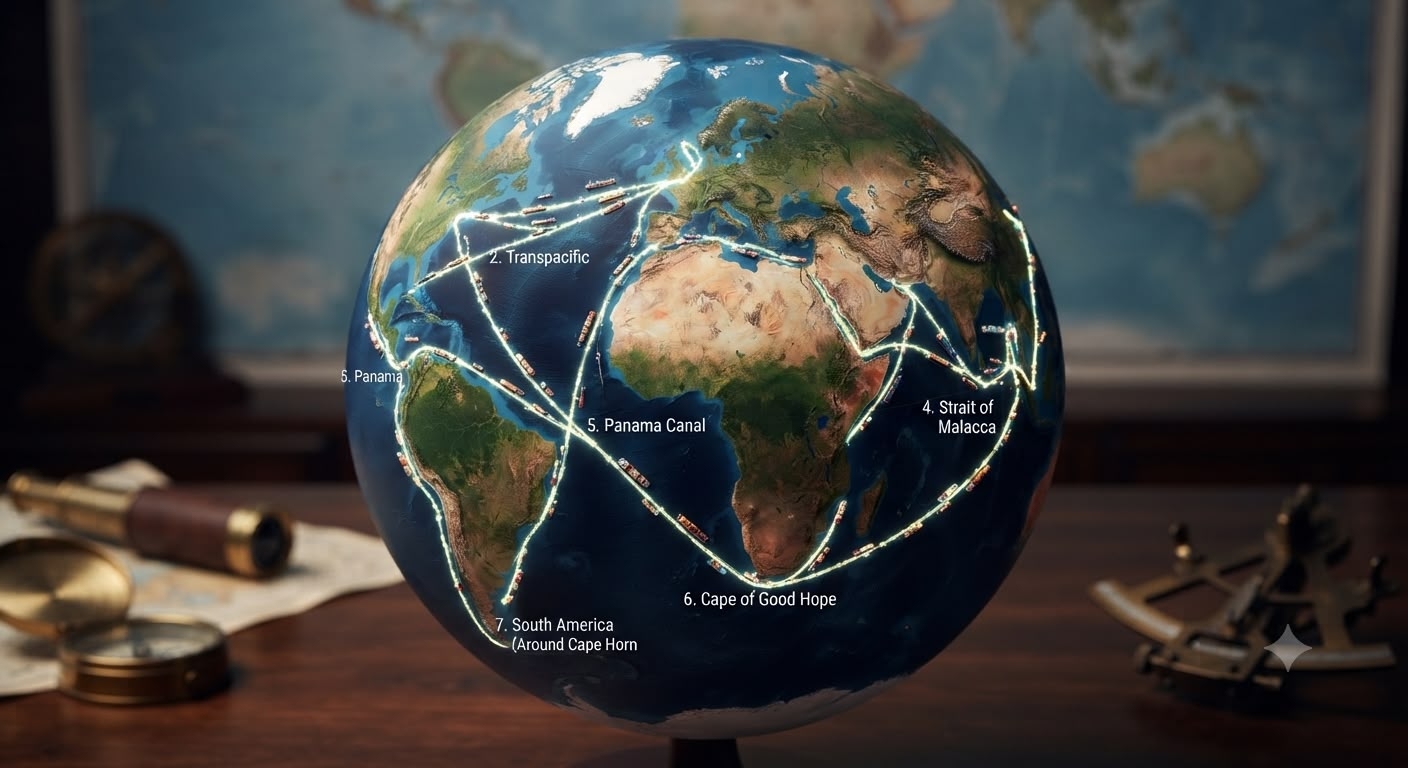
The World`s 7 Most Important Maritime Trade Routes
2026-08-02
Global trade powers economies, powers industries, and
connects countries. These trade arteries are behind the trillions of dollars
that circulate each year. Maritime corridors, canals, and straits ensure the
smooth movement of goods between continents. Some of them are centuries old,
while others are modern engineering feats. Any disruption to their operation
has a ripple effect on the global economy.
1. Suez Canal (Egypt)
The Suez Canal is one of the world’s most famous waterways,
handling nearly 12% of global trade and carrying more than $1 trillion
worth of cargo annually. Connecting the Mediterranean and Red Seas, it creates
the fastest route between Europe and Asia, cutting shipping times by 10 days.
Its strategic role was once again highlighted in 2021 when the container ship
Ever Given blocked the channel, disrupting global supply chains.
2. Strait of Hormuz (Middle East)
The Strait of Hormuz, located between Oman and Iran, is a
vital corridor for energy security. About 17 million barrels of oil pass
through it daily, accounting for a quarter of global consumption. The economies
of China, Japan, India, and South Korea depend on the oil and liquefied natural
gas that pass through the strait. Even minor tensions in the region can send
global oil prices soaring, as has been repeatedly demonstrated since the
US-Israeli attack on Iran.
3. Panama Canal (Central America)
The Panama Canal connects the Pacific and Atlantic oceans
and has greatly simplified maritime trade since 1914. More than 250 million
tons of cargo pass through it each year, on more than 14,000 ships. It is
one of the most strategic routes in the Western Hemisphere, but it is also
vulnerable to climate change. For example, droughts in 2023 restricted
shipping, delaying billions of dollars in cargo shipments.
4. Strait of Malacca (Southeast Asia)
Located between Malaysia, Singapore and Indonesia, the
Strait of Malacca is one of the busiest shipping lanes on Earth. More than
90,000 ships pass through it each year, carrying a quarter of global
trade. It is particularly important for China, as more than 60% of the
country’s oil imports pass through the strait. Blocking the strait would force
ships to seek alternative routes, significantly increasing shipping costs.
5. English Channel (Europe)
The English Channel is one of the world’s busiest shipping
lanes. More than 500 ships pass through it every day, providing trade
links between the UK and Europe. The corridor is largely used for transporting
cars, food and other goods. Due to its high traffic volume, even minor
disruptions caused by storms or strikes can instantly disrupt supply chains
across Europe.
6. Bosphorus Strait (Turkey)
The Bosphorus Strait, which connects the Black Sea and the
Mediterranean Sea, is one of the world’s most strategic waterways. About
48,000 ships pass through it annually, transporting oil, petroleum
products, grain, and metals. About 3% of global oil demand passes through this
corridor. During the war, restrictions on grain exports through the Bosphorus
Strait led to a global increase in food prices, which indicates its strategic
importance.
7. Cape of Good Hope (South Africa)
Before the construction of the Suez Canal, the Cape of Good
Hope, located south of Africa, was a major route between Europe and Asia.
Today, it still retains the importance of an alternative route during
disruptions in other corridors. For example, after attacks on ships in the Red
Sea, thousands of ships changed course to this cape, which increased travel
time by 10-14 days. Although this route is longer and more expensive, it
remains an important guarantee of security in global trade.
These seven trade routes are not just maritime corridors. They are the vital arteries of globalization, allowing businesses to access markets and source raw materials. However, they are vulnerable to geopolitical and climatic changes. Disruptions to these arteries would have a severe impact on the global economy, driving up oil prices and disrupting supply chains.
bm.ge