News
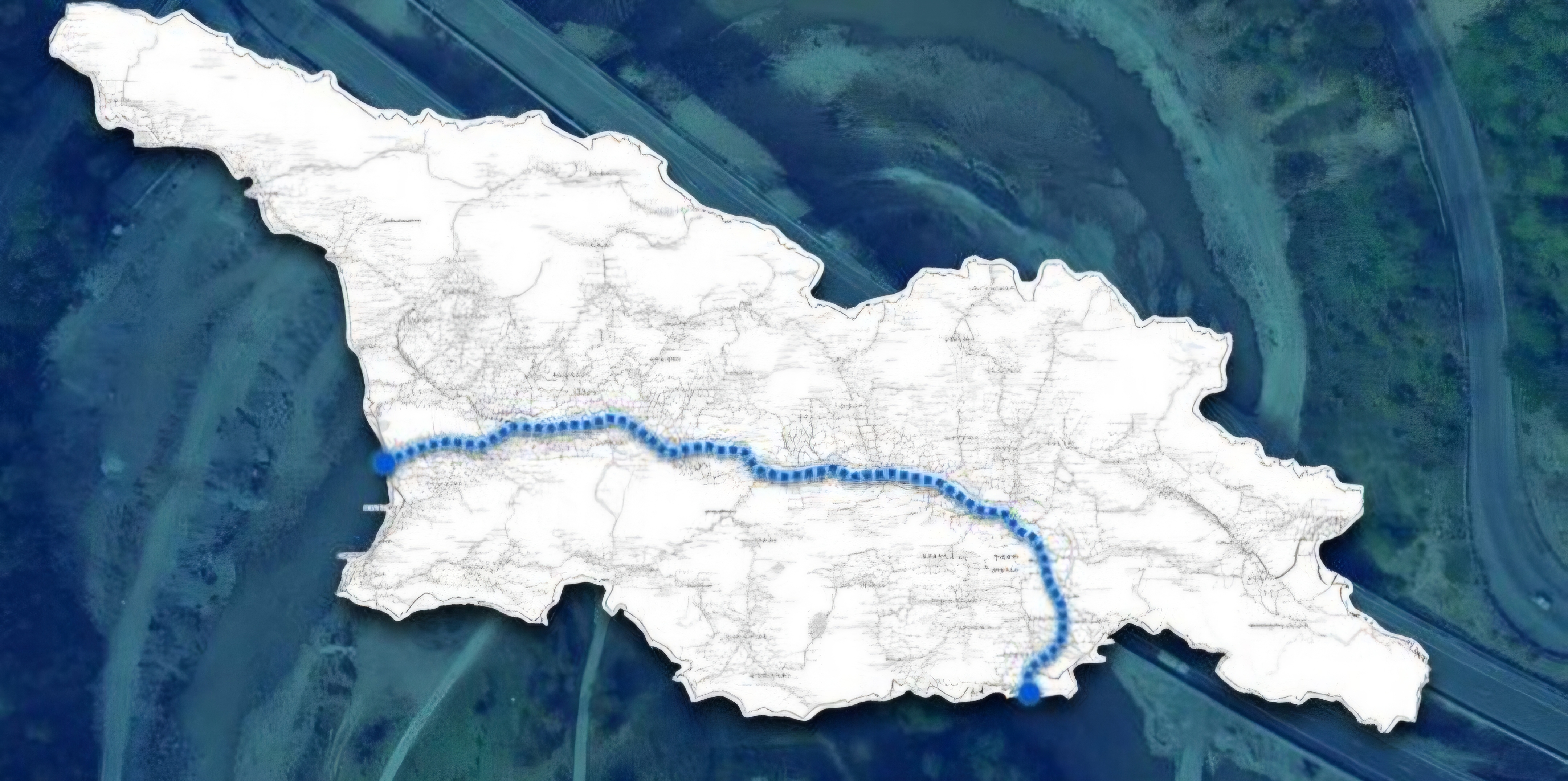
What impact do unfinished road projects have on the country`s economy?
2026-09-24
"Poor management and corrupt deals" – what impact
do unfinished road projects have on the country's economy?
Announced yet protracted road infrastructure projects slow
the country's annual economic growth rate by 0.8–1.0%, according to the latest
study published by the Transport Corridor Research Center (TCRC).
The study indicates that the construction of the E60/E70
international route, ongoing between 2006 and 2026, significantly improved the
quality of Georgia's transit infrastructure; however, even after nearly two
decades of modernization, the transit corridor's full and seamless operation
remains in an unfinished and uncertain state. "The E60/E70 highway running
through the territory of Georgia constitutes a European route of international
significance, forming a unified East-West transport corridor for the country.
The E60 is part of a much larger international route that
connects Europe with the Caucasus and Central Asia, extending as far as the
Chinese border.
The E60 route forms the backbone of Georgia’s primary
East-West transit highway of international importance: the Poti–Tbilisi–Red
Bridge route.
The E70 follows the Black Sea coast and encompasses the
Poti–Batumi–Sarpi international transit highway.
Poti serves as the key junction point where the E60 and E70
meet. Together, the two routes form a 450-kilometer-long primary road transit
network.
To enhance the competitiveness of Georgia's transit network,
the modernization of the E60/E70 routes began in 2006 and entails the gradual
upgrading of the roads into a multi-lane, high-speed highway system," the
study states. TCRC reports that, as of September 2026, the total length of the
E60/E70 network in Georgia is 428.35 km; of this, 324.75 km (75.8%) is already
open to traffic and operational. The year 2032 is cited as the official
deadline for the full completion of the highway.
"It should be noted at the outset that the pace of
construction for the East-West E60/E70 highway has varied over the years:
● 2007–2012: 68.15 km built (average of 11.4 km per year);
● 2013–2020: 198 km built (average of 24.8 km per year);
● 2021–2026: 58.6 km built (average of 11.72 km per year);
● 2006–2026: Average annual construction rate – 16.2 km.
It is noteworthy that the pace over the last six years is
half that of the average rate recorded between 2013 and 2020," the study
states. TCRC also cites examples from other countries, noting that in
Azerbaijan—where the construction of a 503-kilometer section of the E60 highway
began in 2022 and concluded in 2024—work proceeded 40% faster than in Georgia,
with an average of 22.9 kilometers completed annually. Turkmenistan records an
even faster pace of E60 highway construction—three times higher—averaging 50
kilometers per year for an 8-lane, 32-meter-wide highway.
TCRC also addresses the problems that the unfinished transit
corridor creates for the country and its economy. The fact that the transit
corridor remains incomplete even after twenty years of modernization efforts
stems from a lack of consistency on the part of the state, ultimately
disrupting the synchronization of the unified highway project. This manifests
in situations where the replacement of one cabinet of ministers by another
often led to the disregard or violation of decisions regarding project timelines
established by the previous administration—a pattern that negatively impacted
the country's sustainable development.
There are several reasons for this situation: primarily, the
country's challenging terrain—particularly along the Rikoti section—and the
need for a vast number of engineering structures such as bridges and tunnels;
contract non-performance and delays; issues surrounding land acquisition and
resettlement; incremental changes to financing and tender conditions;
performance problems on the part of specific contractors; the necessity of
maintaining traffic flow on the existing road while construction proceeded; the
involvement of incompetent or financially weak contractors; and low-price
dumping. "Companies quote unrealistically low prices to win tenders, only
to find themselves running out of funds later; this is compounded by weak state
management and corrupt dealings with subcontractors," writes the TCRC.
The Transport Corridor Research Center (TCRC) highlights the
specific sections where the most time was lost and where the failure to
complete construction has had the most detrimental impact on the country's
economy.
"Regarding the protracted construction process, it is
essential to identify the specific sections involved and analyze the reasons
why so much time was lost on them, as well as the resulting impact on Georgia’s
transit role and the national economy as a whole.
In terms of delays, three 'critical bottlenecks' stand out
most clearly: Samtredia–Grigoleti, Grigoleti–Kobuleti, and the challenging
Rikoti section; furthermore, construction on a fourth section—Batumi–Sarpi—has
not yet begun."
Added to this is the construction of the Rustavi–Tsiteli
Khidi (Red Bridge) section, which has not yet effectively entered the active
construction phase; the project remains at the tender/procurement stage.
The Samtredia–Grigoleti section warrants special mention, as
it has experienced the longest delays by far. The project began in 2014 and was
scheduled for completion in 2016; however, issues with contractors, contract
terminations, re-tendering, and technical problems have delayed the project by
11 years, and it remains unfinished to this day.
Particular attention should be paid to the restoration
process of the bridge over the Rioni River—part of the first section of the
Samtredia–Grigoleti route—where the completion date was initially set for 2027
but was subsequently postponed to 2028. "Under these circumstances, such
an approach to the highway's continuous operation cannot be viewed merely as a
'construction delay'; for an international transit corridor, it means that a
key section in Western Georgia failed to operate at full four-lane capacity for
years," the study notes.
What impact did these unfinished, repeatedly postponed
road infrastructure projects have on the country's economy?
"A disruption in the synchronization of the
country's sustainable development—specifically regarding the completion
deadlines for construction work announced by various cabinets of ministers—is
clearly evident. Hasty decision-making ultimately disrupted the synchronization
of the unified highway project; this manifested in situations where, following
a change in government, decisions regarding project timelines announced by the
previous administration were frequently disregarded or abandoned.
A shift in the funding strategy of donor organizations
regarding future projects—driven by low fund utilization rates and
protracted road construction timelines..." Donor-funded infrastructure
projects led to increased loan interest rates and a gradual reduction in the
volume of funding allocated for other projects in the country.
Stalled development of the country's industrial capacity
– Unfinished and protracted road projects kept local and foreign investors in a
state of constant uncertainty; due to the lack of adequate roads—and the
resulting low financial return on investment—they refrained from developing
industrial, logistics, warehousing, or cold-storage facilities adjacent to the
road infrastructure.
Rising construction costs – Delays in construction
projects led to increased costs. For instance, the road rehabilitation project
in the Kakheti region, announced by Prime Minister Giorgi Kvirikashvili in
2018, was valued at one billion GEL; today, following multiple postponements,
nearly three times that amount is required for the same project.
Slowing of the country's economic growth rate – "According to empirical estimates, announced and protracted road infrastructure projects slowed the country's annual economic growth rate by 0.8–1.0%," states the TCRC study.
Source: bpn.ge