commercial-diplomacy
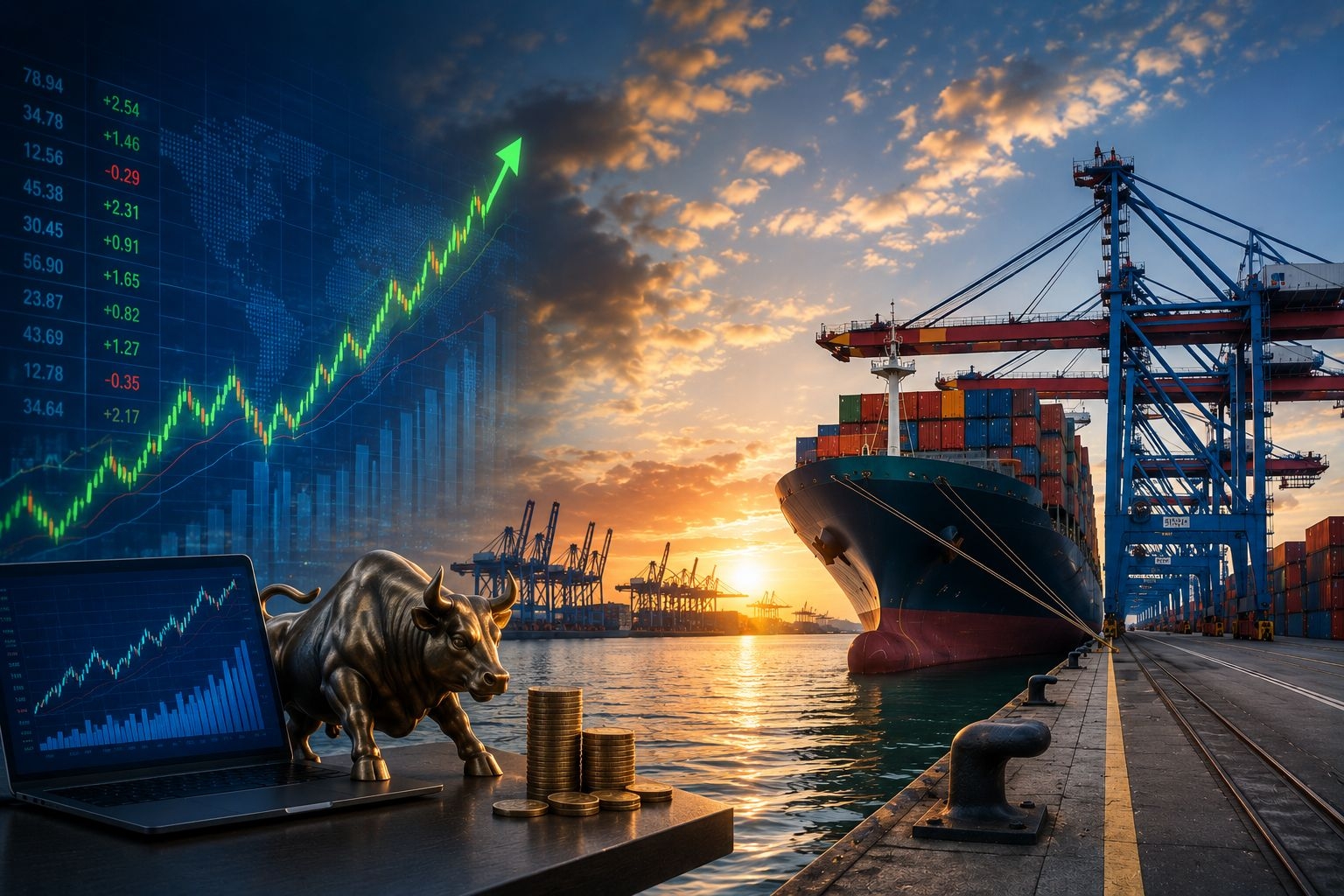
Anaklia Port or Tbilisi Stock Exchange
2026-05-08
"A commercial business should have a commercial basis.
Nobody remembers economics anymore, we almost followed this policy!" -
David Sarajishvili, Georgian industrialist and philanthropist.
Connecting different realities requires courage. And moving
with bold steps requires knowledge of economics.
Modern ports do not work because of well-arranged concrete
structures and/or railways.
The port is burdened by the economy!
But what kind of economy?
Ports, railways, pipelines, digital systems, low or high
taxes are not a guarantee of the country's prosperity. North Korea also has
ports and railways, as well as Iran.
With whose resources should the Anaklia port be built and
how should its revenues be increased?
The main investors in the construction of the port should be
Georgian citizens. The shares of the port should be placed on an exchange
independent of the state, which citizens will purchase transparently, freely
and at an affordable price (conditionally the nominal value of one share is 100
GEL).
The investment capital received from the sale of port shares
should finance the construction of the port and its technical equipment.
Along with the stock exchange, a commodity exchange should
also be established. Trade transactions between European and Asian companies
(buyers and sellers) should be concluded on the commodity exchange. These will
be free trading platforms for fair transactions between manufacturers and
traders. The fairest prices are formed precisely on such trading platforms -
exchanges. For example, the Amsterdam Stock Exchange was established in 1602.
The organizational form of the exchanges themselves should
be a joint-stock company. Obviously, the state should have a regulatory
function for the activities of the exchanges, and this should be paid
Securities Commission, which will be completely independent in making
decisions. High standards of business law are achieved precisely through such
an order. Exchanges register trade and investment transactions, the Securities
Commission sets norms, limits and standards for them to service such
transactions. It is allowed for the state to own a small number of shares of
the port as a block package (this means the right to veto decisions).
To fulfill the agreements made on the exchange, commercial
banks will then provide monetary settlements.
Under equal conditions, the functioning of independent banks
and independent exchanges is forming a market economy, which Georgia has not
had even a single day since its independence.
On the stock exchange, securities - shares of not only
ports, but also various sectoral enterprises - railway, aviation, financial,
industrial, logistics and others And bonds should be traded preferentially for
Georgian citizens, and only then for foreign companies. Citizens and companies
are rewarded over time with returns on investments in securities - dividends on
shares, and annual interest rates on bonds.
The prosperity of the Baltic countries after the collapse of
the USSR was determined precisely by the introduction of a market economy.
Today, the Baltics are successfully creating wealth in the free trade area of the European Union. And
the securities of many successful companies are quoted on the Tallinn Stock
Exchange.
After gaining independence, voucherization was carried out
in Georgia, but the economic result for the population was zero. Because there
was no functioning stock exchange in the country, where citizens would exchange
vouchers received from the state for shares of a specific factory/factory and
become co-participants in economic power. Capital Without a free market, even
the privatization process cannot tangibly increase the country's welfare index
in international rankings.
A free civil society and a welfare state are formed where there is a market economy. This is confirmed by the words of the Prime Minister of the United Kingdom, Margaret Thatcher: "Without economic freedom, no freedom is achievable."
Author: Zurab Maghradze