commercial-diplomacy
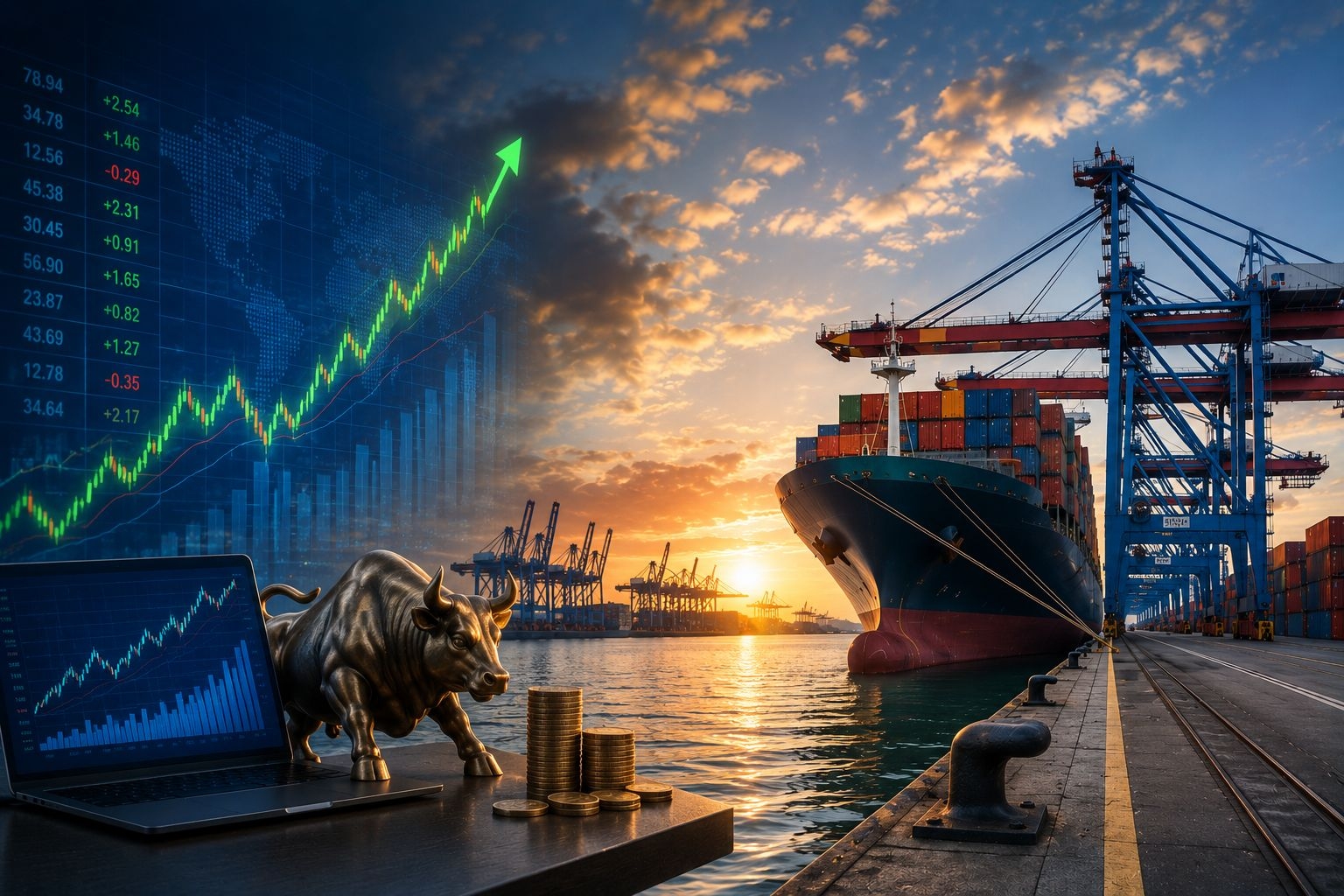
Capital and Asset Market for Georgia`s Transit Routes
2026-09-02
In general, the main function of the exchange is to organize
the market so that many buyers and sellers can find each other, determine the
price transparently and execute the transaction safely. In other words, the
exchange is an organized market that connects demand and supply and creates a
market price from them.
6 main functions of the exchange
1. Connecting buyers and sellers
The exchange creates a single space where participants can
find each other.
2. Price formation
If many buyers are trying to buy and there is little supply,
the price increases. If there is more supply, the price decreases. That is, the
exchange creates the market price.
3. Transparency
Participants can see at what price and in what volume
transactions are taking place. This reduces informational advantage and hidden
prices.
4. Liquidity
The owner of the asset should be able to sell it when he
needs a buyer. The more participants there are, the more liquid the market is.
5. Standardization
The exchange sets the rules: what is sold, in what units,
what quality, how the transaction is concluded and how the settlement is made.
6. Trust and security
The exchange infrastructure and the associated clearing and
settlement systems reduce counterparty risk — that is, the risk that the other
party will not fulfill the agreement.
That is why there are different types of exchanges
Commodity - oil, grain, metal, etc.
Stock - shares and bonds of companies.
Energy - electricity, gas and other energy products.
Forex - currencies.
Futures/derivatives - future delivery or price
contracts.
Logistics - demand and supply of cargo transportation
and transportation capacity.
And here comes an important point:
The exchange does not always trade physical goods. It can
trade rights, securities, contracts, or future income.
For example, a factory is not “sold” on a stock exchange — a
share of the company that owns the factory is sold.
The most interesting question:
If the Georgian transit corridor is an “economic resource,”
what exactly should be the standardized unit that the exchange will bring to
the market?
If we answer this question correctly, we can already determine whether Georgia really needs a “transit exchange” and what it should look like.
Georgian Transit
Exchange (Concept)
Its main idea would be:
The flow of cargo passing through Georgia → real economic asset → investment product → capital → new infrastructure → more cargo.
In other words, a self-reinforcing cycle is created.
1. What would the exchange finance?
● Ports and harbors
● Rail infrastructure
● Logistics centers
● Customs/warehouse complexes
● Container terminals
● Truck fleets
● Cold chain infrastructure
● Energy facilities serving the corridor
● Digital logistics platforms
● Insurance and finance companies
● Infrastructure for new transit routes.
2. What would be “traded” on the exchange?
Here’s the interesting part.
A. Shares
For example, a logistics center was built for $100 million.
The company that owns it can place, say, 30% on the stock exchange:
Logistics Hub Georgia PLC →
30% shares → investors
The company receives capital for expansion by selling
shares, and the investor (shareholder) receives a share in the future profits
of the asset.
B. Infrastructure bonds
For example: “Anaklia Terminal 10-year bond”
The investor provides the project with $100 million (i.e. by
selling bonds to individuals and legal entities).
The project pays, for example, a fixed interest income and
returns the principal after 10 years. This is especially important for projects
where revenues are relatively predictable.
C. Transit infrastructure funds
This may be the most powerful tool. For example:
Georgia Transit Infrastructure Fund
The fund raises $500 million and invests in:
● Ports
● Rail terminals
● Warehouses
● Logistics parks
● Container infrastructure.
A typical investor no longer needs to evaluate a separate
port or terminal — he buys a share of the fund.
3. And the most interesting — “Transit Revenue
Securities”
A completely new instrument can be created here. Let’s say a
specific freight corridor generates certain taxes and fees per year. A special
investment instrument can be created, the income of which is tied to the cash
flows generated from the use of the corridor.
For example: Middle Corridor Revenue Note
The investor finances the infrastructure and in return
receives income from the cash flows generated by the project/asset. This is
very similar to the project finance + capital markets model.
4. The exchange would have a second “layer” — a logistics
exchange
Here, a completely different type of trade begins.
For example:
Cargo: China →
Georgia → Europe
Carrier: Free container
Railway: Free capacity
Warehouse: 5,000 m² of free space
Terminal: 200 TEU free capacity
All of this could become the subject of a real-time market
offer.
So:
The stock exchange finances the infrastructure.
The logistics exchange uses this infrastructure.
These two systems reinforce each other.
5. How would it work in real life?
Let's say Georgia needs a new 500,000 TEU logistics
terminal.
Project cost:
$300 million
Financing model:
$80 million — founders’ capital
$70 million — bank loan
$100 million — infrastructure bonds
$50 million — investment fund
The terminal starts operating.
Then: cargo →
terminal → service fee
→ income → investor.
At the same time, if the company is successful, the value of
its shares increases. Thus, the physical flow of transit is transformed into a
financial asset.
6. Why might this be particularly interesting for
Georgia?
Because Georgia’s main resource is not just territory. It
is:
Geography + port + railway + roads + energy + customs +
financial system + international trade.
If we perceive all this only as infrastructure, Georgia
receives transit fees.
If we add to this the capital market, we can get:
Transit fees + financial services + investments + asset
appreciation + banking/insurance revenues.
In other words, Georgia is trying to become not just a
“bridge”, but a “bridge financial center”.
7. Final architecture
The “Georgian Transit Exchange” should not only be a place
where company shares are traded.
It should be an institution that connects the real economic
assets of the transit corridor — cargo flows, infrastructure, capacity and
future revenues — with private capital.
In this model, Georgia can try to create a regional hub
where Central Asia - Caspian Sea - Caucasus - Black Sea - Europe corridor
projects will not only pass through, but will also be financed, insured, traded
and valued.
Why does an exchange exist at all?
It helps:
■
Companies — to raise money
■
People — to invest and make a profit
■
The economy — to develop
If we look at this concept at the level of a state strategy, the next step is already very interesting: what should the specific business model of such an exchange look like — who owns it, who regulates it, what licenses are needed, and what products should be launched on day one.
Zurab Maghradze, DBA