commercial-diplomacy
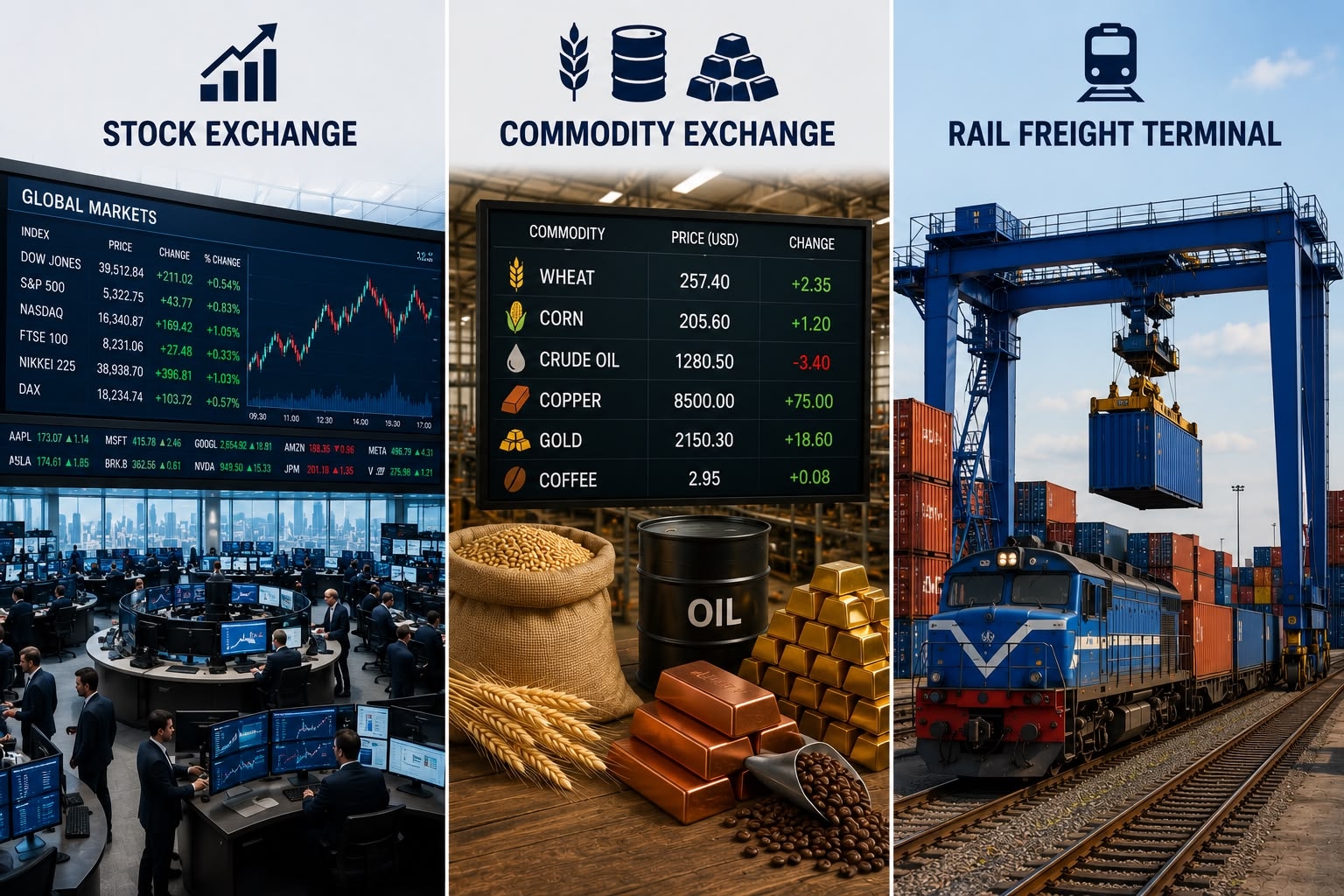
Model for the Development of Exchanges and Terminals
2026-06-28
In a market economy, a securities commission is an important
and necessary regulatory structure. Such a commission should be institutionally
independent in its decision-making and accountable to parliament.
European examples
United Kingdom – The Financial Conduct Authority
(FCA) is an independent regulatory body. It is accountable to both the Treasury
and Parliament and regularly appears before parliamentary committees.
Switzerland – The Swiss Financial Market Supervisory
Authority (FINMA) is an institutionally, functionally and financially
independent body and reports directly to parliament.
Portugal – The Comissão do Mercado de Valores
Mobiliários (CMVM) is an administratively and financially independent
securities commission, operating within the accountability framework
established by parliament.
Slovenia – Securities Market Agency is an independent
agency established by law; its system of independence and accountability also
includes parliamentary participation.
Liechtenstein – Financial Market Authority (FMA) is an independent financial supervisory authority, the establishment and activities of which are controlled by parliament through a legislative framework.
The main functions of the Commission are:
● Regulation of the securities market;
● Protection of investors' rights;
● Prevention of fraud and market manipulation;
● Control of transparent disclosure of information by
issuers;
● Ensuring the stability and fair functioning of the capital
market.
A commodity exchange acts as an intermediary and organizer in international transit trade. It ensures that trade is free, transparent, competitive and safe.
Its main functions are:
● Connecting buyers and sellers – creates an
organized market where traders from different countries make deals.
● Market price formation – the price of goods is
determined based on demand and supply.
● Standardization of transactions – establishes
uniform rules for the quality, quantity, delivery, and settlement of goods.
● Risk reduction – helps participants insure
themselves against risks caused by price changes through futures and other
exchange contracts.
● Information dissemination – publishes current
prices, trading volumes, and other important market data.
● Facilitation of international trade – simplifies trade between companies in different countries, because all participants operate under uniform rules.
Terminal
Development Model in Europe
In Germany and the Netherlands, the railway infrastructure
is separated - the tracks and stations are state-owned, but everyone has
regulated access. Terminals are competitive businesses and are private or
public-private partnership companies. The main idea is that whoever manages the
cargo better → wins
the market. And capital comes from the stock exchange and institutions.
Terminals are financed by:
● Shares
● Bonds
● Pension funds
That is why the Netherlands and Germany have had and continue to have a large scale of cargo turnover and rapid economic growth.
In Georgia, the infrastructure is concentrated in the
state.
"Georgian Railways" is both the owner of the
infrastructure and the main operator. That is, the system is less
"divided". Accordingly, the terminals are poorly developed. There are
few logistics terminals in Georgia, and most are state-owned or state-linked or
controlled by large groups. As a result, competition is limited, which is
compounded by a weak capital market.
The stock exchange practically does not play a role:
● Companies do not have an IPO path (initial public offering
of shares on the stock exchange);
● Investment comes mainly from banks;
● Long-term institutional capital is weak.
The result is a closed logistics system. This leads to - fewer terminals, less competition, high dependence on 2-3 large players, fewer international operators.
Key differences
Europe: Infrastructure is state-owned, but terminals
are a competitive market.
Georgia: Infrastructure and operations are more
concentrated, and the market for competitive terminals is weak.
Conclusion: The key to a market economy in Georgia
is:
● How fragmented the system is
● How many independent operators are there
● How much capital is available to new players
Trade, investment, energy and logistics are the challenges of modern geoeconomics, and stock, commodity and currency exchanges in Georgia would play a catalytic role on the Silk Road.
Zurab Maghradze, DBA
References: delorscentre.eu; fca.org.uk;