commercial-diplomacy
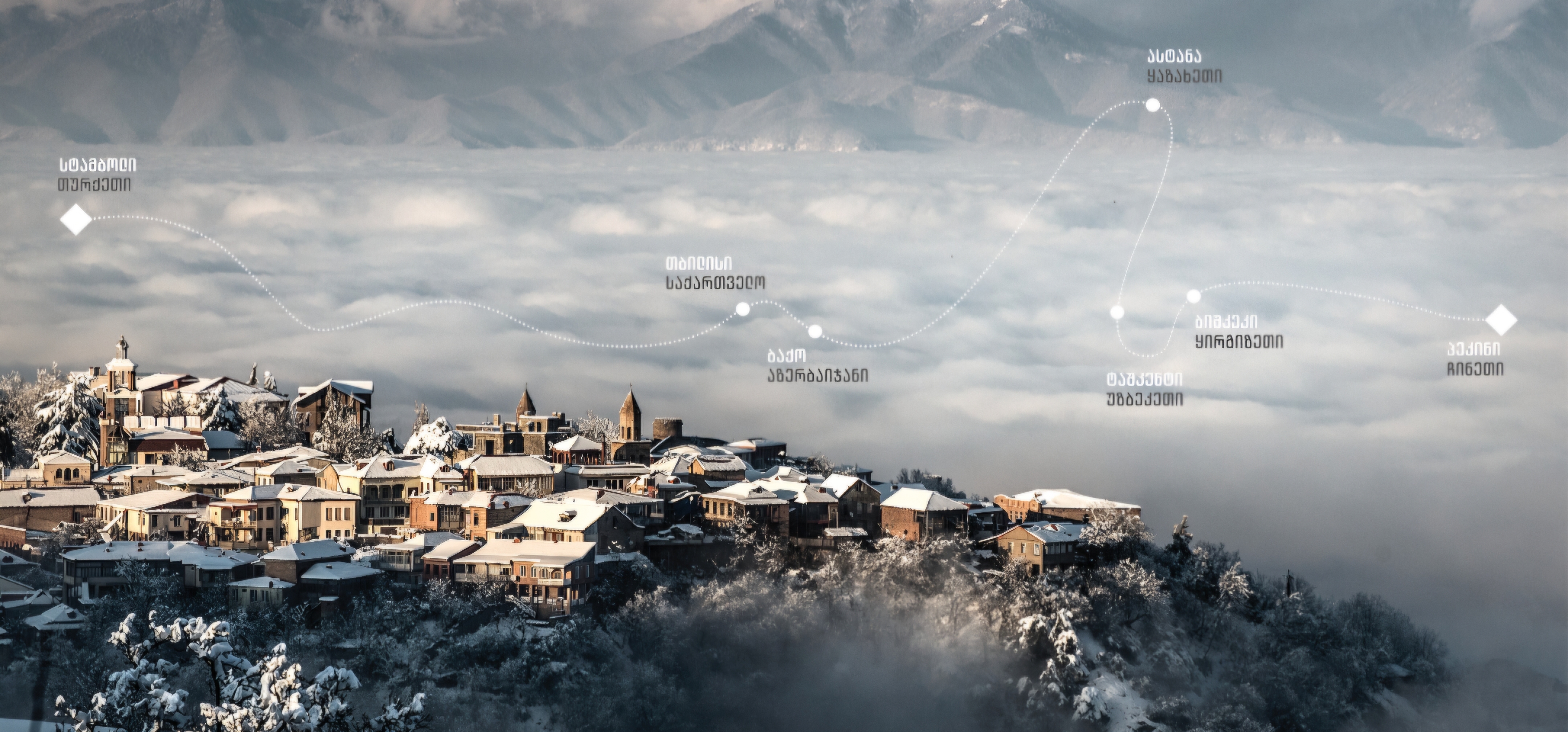
Silk Road - A New Odyssey
2025-11-01
Steeped in history and tradition, the Silk
Road is presented in a new, creative journey by seven artists and Hennessy X.O
For centuries, the members of the Hennessy
Tasting Committee (Comité de Dégustation) have been meeting to taste cognac
spirits and create their most daring blends. Created in 1870, Hennessy's most
iconic cognac - Hennessy X.O - offers seven distinct flavors that flow
perfectly into each other: sweet notes, rising heat, scorching flame,
chocolatey drowsiness (chocolate velvety), extreme clarity (spicy edge), woody
crunch (wood history) and endless echo. At the Hennessy Maison in France, seven
artists from seven countries along the Silk Road shared Hennessy’s traditional,
refined craftsmanship. It was there that an interesting exchange of ideas
between the artists and Hennessy took place. The result was works that were
inspired by the artists’ personal journeys, inspired by each drop of Hennessy
X.O., and that reflected their sense of “eternal journey.”
The odyssey begins in the Karakoy district
of Istanbul, in the studio of artist Burcak Bingol. The tables are filled with
flowers and white ceramics from Hennessy’s visit to the Chateau de Bagnolet.
“It was a perfect match for my interest in the Silk Road,” he says, “because one of the Asian art forms is the flower motif.” Then he visits the 15th-century Topkapi Palace. “Look at the details, what a delicate work,” he says, pointing with a smile at the tiles painted with blue and white flowers. “We call these ancient Chinese-style lotus flowers hatayi, and that’s what my project with Hennessy is called, because it’s also a reconciliation of Eastern and Western ideas – not all of Istanbul.”
From Turkey to Georgia
The Silk Road winds its way from Turkey to
Georgia, where Roko Iremashvili is spinning a new work in his Tbilisi studio –
a kind of gigantic game of “Crosses and Zeros”. “Zero refers to eternity, and
the cross is a religious symbol. Iconography is always present in my work”.
Roko goes to the Monastery of the Cross in Mtskheta and observes an icon on
which Jesus’ hand is extended as a sign of eternity. According to Roko, art is
meant to present an old symbol in a new way – and it is.
Symbolism is not unique to Georgia among
the nations along the Silk Road. Near Baku, on the tip of a volcano, Rashad
Alakbarov watches the hardening of mud that has been blown up in the
sulfur-soaked air. “For me, as an Azerbaijani, fire evokes strong emotions,”
says the son of the land of fire. “In my work, this element will be presented
in an elemental form.”
Far away, beyond the steppes, Astana rises into the sky, its gleaming glass and steel skyscrapers seeming to solemnly salute the ancient traditions of the Silk Road. Askhat Akhmedyarov’s studio is located in the National Museum and is full of witty, quasi-political representations of society. “I am a nomad in space among modern worlds,” he explains. “As a resident of the Silk Road, I need to renew myself, to put down roots somehow.”
From Uzbekistan to China
The turquoise-domed Chorsu Bazaar in
Tashkent, a totem of cultural heritage, contrasts with the Kazakh capital.
“Tashkent is a colorful city,” says Vyacheslav Useinov, “and that’s what makes
it so special.”
Vyacheslav’s city is a mix of cracked
minarets, golden domes, and Soviet architecture, which, along with the
15th-century Silk Road, makes Tashkent unique. “The city’s history is reflected
in everyday life,” he says, “and it allows us to blend the old and the new.”
Far from the hustle and bustle of Uzbek
bazaars, Bishkek, in Kyrgyzstan’s sparsely populated north, is quiet. Viktor
Sirnev steps out onto the circular, sunny roof of the Burana Tower, which
overlooks almond and frankincense orchards. The tower is all that remains of
Balasagun, a once-thriving trading hub on the Silk Road. “This is a land of
living history,” says Viktor.
“I’m interested in the interplay of old and
new, the meeting of East and West.”
Finally, Beijing looms on the horizon—the end of this grand journey. Yin Xuzhen stands on the flagstones of Tiananmen Square, watching the national flag being lowered. Inspired by the seven flavors of Hennessy, Yin’s seven towers of different colors echo the cultures of the Silk Road. Yin recalls a Chinese proverb: “A thousand miles traveled is better than a thousand books read.”
nationalgeographic.ge