commercial-diplomacy
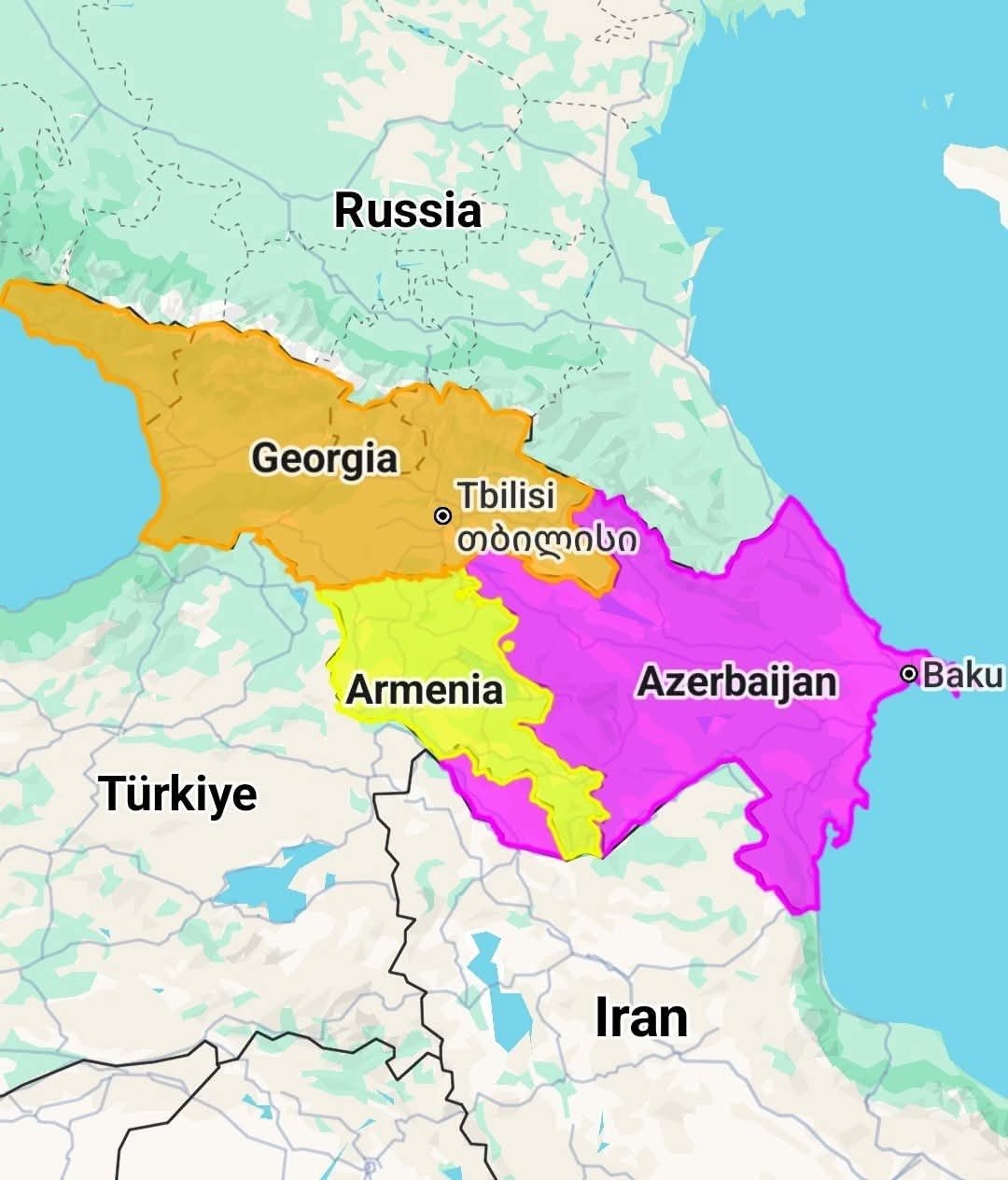
Tbilisi, Baku and Yerevan mean the way from London to Bombay
2026-04-24
The idea known as the "Trump
route" has apparently raised uncertainty and questions, including - will
Georgia lose its transit function?
The author of the article addresses the
reader: Let us agree on one main condition at the very beginning, that
connecting different realities requires courage. And taking this condition into
account, let us reassess the Silk Road and its challenges.
As an initial summary, we would like to
give the following assessment that Denmark, Belgium, the Netherlands and
Germany own important ports in the North Sea. The mentioned countries have a
market economy system and their ports, as competitors in the common sea, serve
the cargo turnover of large vessels. By competing with each other, they create
a powerful economic region. Their ports do not divide anything. They offer
manufacturers and consumers sophisticated financial and logistical services and
a well-functioning transit infrastructure.
According to Belarusian Railways, on
September 12, 2025, Poland completely closed its rail traffic with Belarus.
This means that shipments from China to Europe via the
Kazakhstan-Russia-Belarus double-track railway have been suspended. For years,
transit shipments have been carried out along this highway, which accounted for
about 3% of China's exports. The bulk of Chinese exports were carried out by
sea.
The railway line through Poland has a
capacity of 80-90 pairs of trains per day (freight and passenger). In reality,
the number of transit container trains from China is about 20-30 trains per day
in a given direction.
A container train has an average of 54
carriages, the length of which is about 700-900 meters. During the waiting
period, one train occupies almost a kilometer of track. Several trains can be
deployed at large railway stations. But if the number of such trains is in the
tens, this will create serious problems for the movement of local trains. It is
also known that the Chinese government provides significant subsidies for rail
transportation, and often empty freight cars intended for reverse cargo accumulate
at the Belarusian-Polish border crossings, which creates some kind of traffic
jams.
The most important - the double-track
railway line passing through Russia, is divided into three branches at the
Belarusian-Polish border:
1. Kuznitsa Białostowska (Poland) - Bruzgi
(Belarus);
2. Semyanovka (Poland) - Svisloch
(Belarus);
3. Terespol (Poland) - Brest (Belarus).
Despite the presence of three branches of
the Belarusian-Polish railway crossings in the transportation of trade cargo
between Europe and China, there were problems with technical maintenance even
before the war in Ukraine. Let's take into account that this only applies to 3%
of Chinese cargo.
Now let's assume that after Poland closed
the border, Chinese cargo shipments to Europe were redirected to the middle
corridor. How could anyone imagine that the Baku-Tbilisi-Kars single-track
railway could handle the volume of cargo that the three branch railways in
Poland served?
In addition, it is worth considering that
cargo from Russia to Europe moved through the railways and ports of Latvia,
Estonia, and Lithuania. On which political restrictions are currently imposed.
Transit cargo also moved from Russia to Europe through Ukraine, which is
impossible in wartime conditions.
Compared to the northern route of Muscovy,
the middle corridor through the Caucasus is an accessible route for all of
South and East Asia, the infrastructure of which is not yet ready.
Let us imagine that instead of (or in
addition to) the three branches of the railways of the three Baltic countries
and the Polish railways, transportation from Asia to Europe would be carried
out along the following Caucasian routes:
Baku - Syunik - Nakhichevan Railway;
Baku - Gyumri - Kars Railway;
Baku - Tbilisi - Kars Railway;
Baku - Batumi - Trabzon Railway;
Baku - Tbilisi - Poti Railway;
Baku - Tbilisi - Sukhumi - Kerch Railway.
The listed railway lines would have
corresponding freight and passenger transportation destinations. The question
is to what extent the Caucasian railway branches would be functional and
sufficient to provide logistics services for even 3% of Chinese exports.
Gyumri Dry Port and Akhalkalaki Logistics
Center, together, are nodes of enormous logistical potential. Including for the
South-West Corridor: India - Iran - Armenia - Georgia - European Union.
From the day Georgia becomes a member of
the European Union, that is, it joins the free market space and has a market
economy order, with independent exchanges, all transit routes will immediately
be operational - TRACECA, CAREC, CASCA, CAMCA, LAPIS LAZULI, VIKINGROUTE...
Accordingly, the Caucasus will become a place of confrontation between the European Union with a GDP of 19 trillion dollars and the second economy of 19 trillion dollars - China. To which will be added trade caravans from the industries of Korea, Japan, Taiwan, Singapore, India, Pakistan, the Arab world, Egypt and Indonesia to Europe.
Author: Zurab Maghradze