commercial-diplomacy
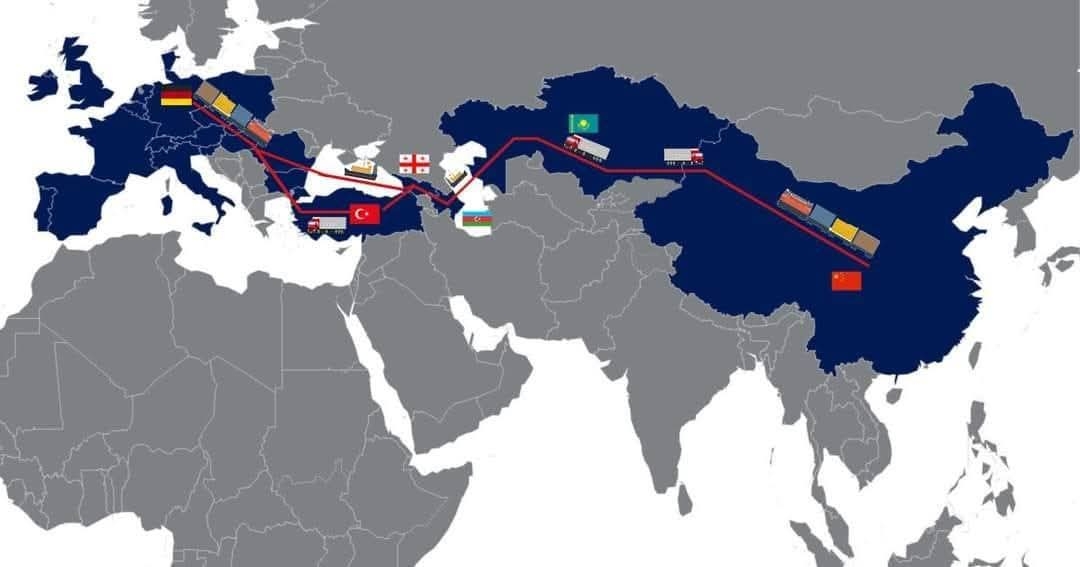
The Idea of the Georgian-European Niko Nikoladze - the Shortest Trade Route between Europe and Asia
2026-03-31
In May 1918, in Batumi, during the most
important decisions for Georgia, the door of the negotiation hall opened and
the young German General Otto von Losov entered. He looked around the people in
the hall and suddenly went straight to Niko Nikoladze, who was in the Georgian
delegation.
- You are Niko Nikoladze, right? The
general asked politely.
- Yes, how do you know?!
- You often visited me in my house in
Germany, because you are a friend of my father - the general replied.
This acquaintance and the goodwill of Otto
von Losov, in our opinion, played one of the outstanding roles in the
subsequent rounds of negotiations.
As you know, dear reader, by this time the
Turkish army had reoccupied the territories of Tao-Klarjeti and Adjara, which
it had left during the Russo-Turkish War in 1878, and had reached Choloki. The
then newly formed Transcaucasian Sejm, which consisted of Georgia, Armenia, and
Azerbaijan, sent a delegation composed of representatives of all three nations
to Batumi for negotiations. The delegation was headed by the Minister of
Foreign Affairs, Akaki Chkhenkeli. In addition to Akaki Chkhenkeli, there were
two more representatives from the Georgian side in the delegation, Zurab
Avalishvili and Niko Nikoladze. Niko Nikoladze was chosen precisely because he
was the last Mohican of the great Tergdales and the first European working at
the turn of the 19th and 20th centuries, who, after centuries, reintroduced
Europe to Georgia through word and deed. Therefore, who should be in the
delegation, or not, because they were going to negotiate with European Germany.
The goal of the delegation was to convince the German side, so that they could
force the allied Turkey to stop its expansion and withdraw its troops - the
German representative was the aforementioned general and the son of Niko
Noladze's friend - Otto von Losov.
After much bargaining and discussion, Otto
von Losov singled out the Georgians separately and suggested that they provide
protection and protectorate, not for all three countries of Transcaucasia, but
for Georgia. But for this, Georgia had to withdraw from the Sejm of
Transcaucasia, because Azerbaijan and Turkey were already considered
like-minded, and the Armenians had other goals. However, this alone was not
enough, the Georgian side had to justify how Georgia could be interesting to
Germany. Otto von Losov promised Niko Nikoladze and the Georgian side that if
sufficient justification was presented, he would mediate Georgia with the
German government.
As Zurab Avalishvili, who was in the
delegation, writes in his book "Independence of Georgia", Niko
Nikoladze sat down and in one night formulated a plan in which, along with many
aspects, he placed the main emphasis on useful minerals and natural resources -
such as manganese in Chiatura, coal in Tkibuli, timber in Svaneti, as well as
the Transcaucasian Railway designed by him, and many others. But the main and
foremost, as the builder of the Georgian sea gate in Poti, he was the first to
voice the idea that he had written about in general terms half a century ago in
1871 - this was the restoration of the oldest and shortest trade route from
Europe to Asia passing through Georgia. In this document, Niko Nikoladze called
this route Berlin - Poti - Beijing.
Von Losov immediately sent Niko Nikoladze's
state plan, written down as theses, to his government, from which a response
arrived by the afternoon of the same day that Germany would assume protectorate
over the Georgian state if Georgia gained independence and became a separate
state. Foreign Minister Akaki Chkhenkeli immediately called Tbilisi and
demanded that Georgia immediately gain independence before it was too late. And
indeed, on May 26, 1918, the Georgian National Council convened and at 5:10 a.m.
Georgia's independence was declared.
After that, relations between Georgia and
Germany continued with Georgia, as an already independent state, officially
sending a delegation to Germany, where, based on the above-mentioned plan,
Germany fulfilled its promise, signed and assumed protectorate over Georgia. Of
course, the author of this plan, Niko Nikoladze, was in this delegation. And
with all this, Georgia gained independence and maintained its sovereignty.
So, dear reader, if you look at the
contribution of Niko Nikoladze, this great Kutaisi resident, to the restoration
of independence, it is particularly great.
Yes, it is true that the country maintained
this sovereignty for only 3 years and in 1921, Bolshevik Russia occupied us
again, but 70 years later, based on the Georgian Act of Independence of 1918,
our country declared independence again on April 9, 1991.
In this independent country, the same list
that the great Niko wrote down for the German state (i.e. Europe) has slowly
come to life, and among them, the most important idea of the shortest trade
route between Europe and Asia - Berlin - Poti - Beijing - has been revived,
which in 1993 Eduard Shevardnadze first called the “Transeka” project and then
the ancient name - the Great Silk Road. However, as often happens around Niko
Nikoladze, Shevardnadze did not even mention this great Georgian genius, who wrote
and re-voiced the idea of reviving this ancient road a century ago.
On December 14, 2023, Europe officially
opened the way for this idea and granted us the status of a candidate country
for the European Union, which gives Georgia the function of the aforementioned
shortest trade route for both continents. Therefore, as we recall, this is
vital for our nation and its sovereignty!
So slowly and painfully, despite the interference of many and the same occupying states, Georgia is regaining its geostrategic function and the "prodigal son" is returning to his own family - which is called Europe and the European Union. This is how the dream of the great and foremost Georgian European, Niko Nikoladze, and his brilliant ideas, which his descendants will sooner or later bring to fruition, is fulfilled and takes wing!
Page: Georgian Idea