pylonology
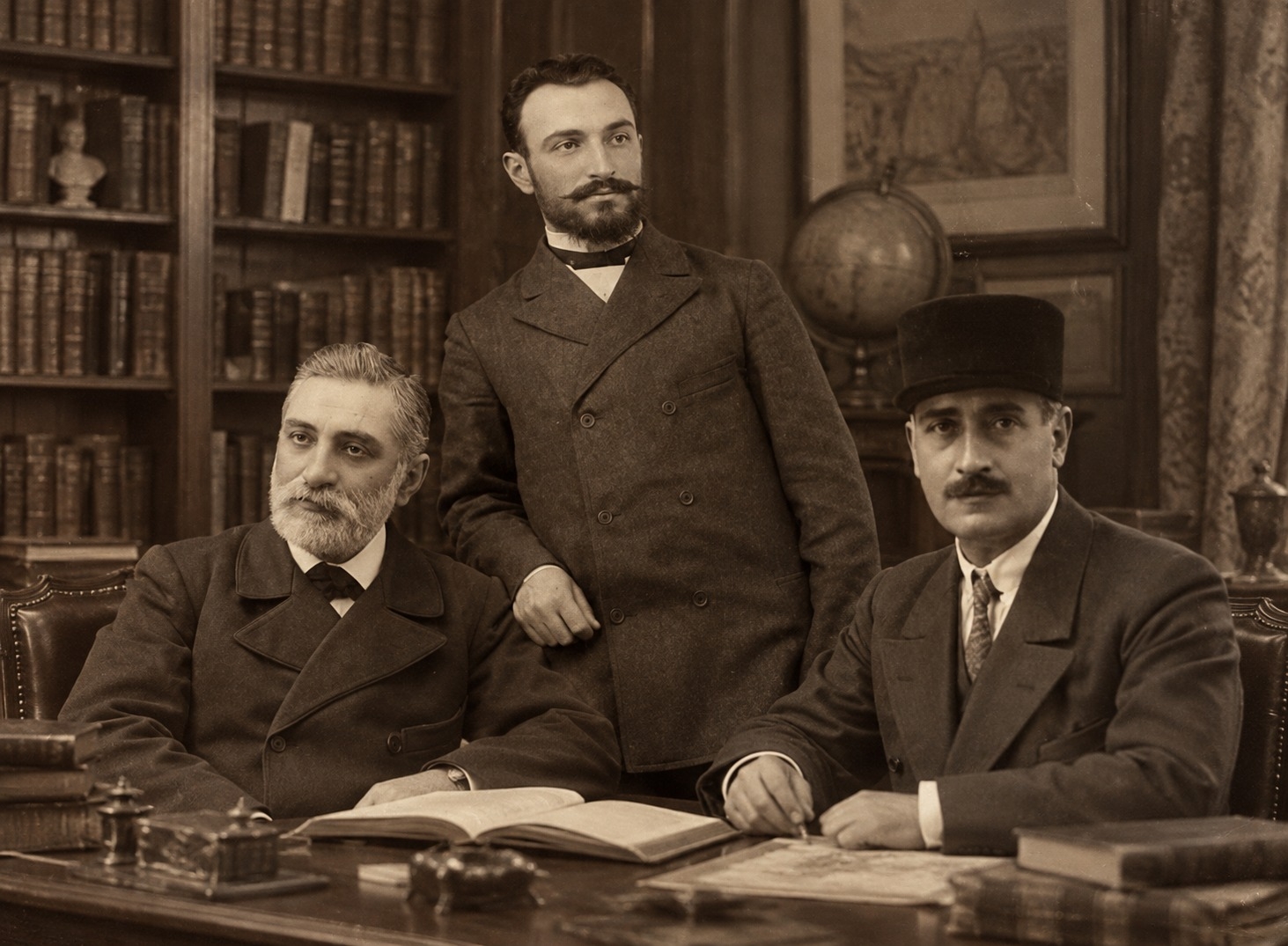
Georgians Envisioned the Southwest Corridor a Century Ago
2026-10-13
India – Iran – Armenia – Georgia: Historical Ties and
Modern Trade Opportunities
More than a century ago, Georgian entrepreneurs and
engineers were active in international transport projects linking the economic
spheres of India, Iran, and the South Caucasus.
Today, this historical experience takes on special
significance against the backdrop of the "Southwest Corridor"
concept, which envisions the movement of cargo from India—via Iran and
Armenia—to Georgia and its Black Sea ports.
The Southwest route concept aims to establish an additional
transport corridor for Indian goods bound for Europe. Its economic importance
extends beyond mere transit; it represents a prospect for developing new trade
ties, logistics services, and investment opportunities.
Three Georgian Figures — Three Historical Directions
1. The India Direction — Ivane Varazashvili
Ivane Sopromis dze Varazashvili (1879–1955) was a Georgian
engineer-colonel and a specialist in railway transport. Historical records
indicate that in 1928, he traveled to Iran and became involved in a railway
construction project aimed at extending a line from Iran to the Indian border.
The significance of his work lay in the fact that the
railway project was intended to extend beyond Iran's borders, serving to
establish a transport link toward India.
This historical concept is conceptually similar to the
modern idea of the
Southwest Corridor: connecting cargo originating in India to the South Caucasus
and Europe via Iran.
2. Iran — Akaki Khoshtaria
Akaki Khoshtaria (1873–1932) was a Georgian entrepreneur and
financier who developed transport and industrial operations in Iran. In 1913,
he founded the "Persles" company in northern Iran and constructed a
dedicated railway line—"Talrud"—for transporting timber. His business
activities also encompassed transport services, trade, and industrial
investments.
Khoshtaria’s experience demonstrates that transport
infrastructure creates real value for business when it facilitates production,
the movement of raw materials, and trade flows.
Today, Iran serves as a pivotal link in the Southwest
Corridor: connecting cargo from its ports northward—via Armenia and Georgia—to
Black Sea markets creates additional transit opportunities.
3. Armenia — Giorgi Tumanishvili
Giorgi Pavles dze Tumanishvili (1872–1937) was a Georgian
railway engineer whose work was directly linked to the Tbilisi–Yerevan railway
line.
From 1896 to 1902, he worked as a section chief during the
railway's construction and subsequently became the line's manager. From 1906 to
1918, Tumanishvili served as the chief engineer of the Transcaucasian Railway
Administration.
His work constitutes a significant part of the history of
transport links between Georgia and Armenia. Even today, the development of the
South-West Corridor requires the effective interconnection of the two
countries' transport infrastructure, the simplification of border procedures,
and the reliable organization of cargo movement.
From Historical Ties to Modern Free Trade Opportunities
Transport infrastructure alone cannot ensure the development
of the South-West Corridor. Equally important are trade regimes, customs
cooperation, and the legal foundations of economic relations between the
countries.
Armenia’s example is particularly interesting in this
regard.
Armenia – Iran
On December 25, 2023, a free trade agreement was signed
between the Eurasian Economic Union and Iran. The agreement entered into force
on May 15, 2025. As a member of the Eurasian Economic Union, Armenia is a party
to this agreement.
Armenia – India
On April 20, 2023, the first trilateral political
consultations between the foreign affairs agencies of Armenia, Iran, and India
took place in Yerevan, focusing on economic cooperation and regional transport
links. On November 18, 2023, Armenia and India also discussed expanding their
bilateral trade and economic relations.
However, accuracy is important: no bilateral free trade
agreement between Armenia and India has been signed to date. The
cooperation that developed in 2023 concerned the expansion of trade relations
and customs issues, rather than an existing free trade regime.
Armenia – Georgia
The free trade agreement between Georgia and Armenia was
signed on August 14, 1995, and entered into force on November 11, 1998. It
establishes a free trade regime for the trade of goods between the two
countries, subject to relevant rules and exceptions.
Conclusion: History and Modernity in a Shared Transport
Space
Ivane Varazashvili’s railway project spanning from Iran to
the Indian border, Akaki Khoshtaria’s transport business in Iran, and Giorgi
Tumanishvili’s work on the Tbilisi-Yerevan railway represent three distinct
historical examples united by a common idea: infrastructure serves as a tool
for strengthening economic ties between nations.
Today, this historical experience is complemented by modern
trade policies—specifically, the free trade agreement with Iran within the
framework of the Eurasian Economic Union and the existing free trade regime
with Georgia. Meanwhile, Armenia continues to expand its trade and transport
cooperation with India.
These factors create significant prerequisites for the
South-West Corridor; however, its success will depend on infrastructure
readiness, the commercial competitiveness of shipping operations, customs
procedures, and international cooperation.
A century ago, Georgian entrepreneurs and engineers were developing transport infrastructure in various countries. Today, the establishment of a new economic zone connecting India, Iran, Armenia, and Georgia could serve as a continuation of this historical legacy.
Zurab Maghradze, DBA
Sources:
nplg.gov.ge / georgianencyclopedia.ge
georgianencyclopedia.ge / eaeunion.org
commerce.gov.in / traceca.ge