pylonology
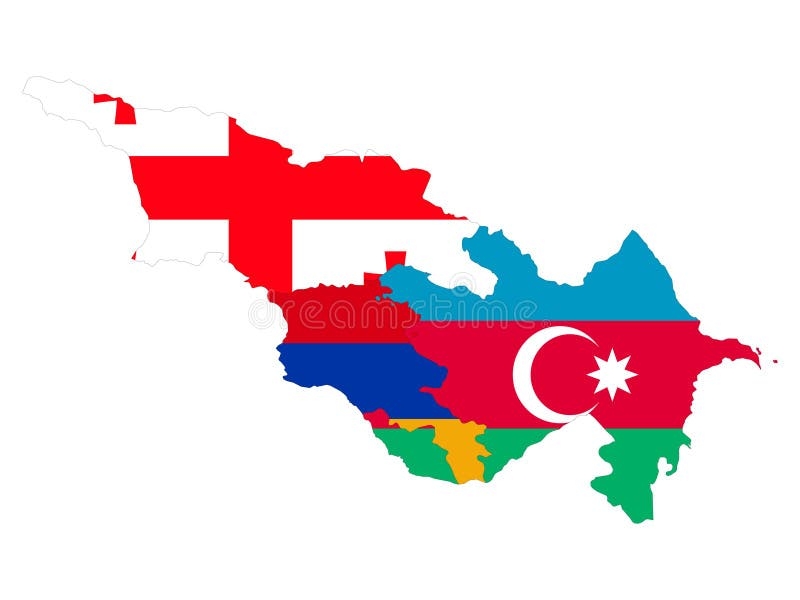
Pylonology ● The Caucasus Beyond Competition
2026-10-17
Regional Cooperation
The future of the South Caucasus lies not in competition,
but in cooperation. The flows of cargo moving from China, Central and South
Asia, Japan, and Korea toward Europe are so diverse and large-scale that no
single country or transport corridor can handle them alone. What is required is
an integrated network of interconnected railways, seaports, highways, customs
systems, and logistics centers.
In this process, Azerbaijan, Georgia, and Armenia need not
replace one another; rather, they can strengthen each other’s capabilities. The
restoration of railway connections in Armenia should not be viewed as an
obstacle to the development of the Baku–Tbilisi–Kars (BTK) railway. On the
contrary, if new and existing routes operate in a coordinated manner, the
region will attract more cargo, offer a wider range of options for carriers,
and enhance its own significance as a link between Asia and Europe. The logic
is simple: the more well-developed routes, border crossings, and logistics hubs
a region possesses, the more flexible and resilient its transit system becomes.
Achieving this requires not only the construction of infrastructure but also a
shared economic vision, coordinated tariffs, digital customs procedures, and
the seamless movement of cargo.
The North Sea Experience — Competition Through
Cooperation
The European experience clearly demonstrates that ports in
neighboring countries can successfully coexist within a shared maritime space.
Denmark, Germany, the Netherlands, and Belgium host major maritime and
logistics hubs along the North Sea coast. Rotterdam, Antwerp-Bruges, Hamburg,
and various Danish ports serve different types of cargo, industrial sectors,
and trade routes. Their relationship is not based solely on competition: the
ports are interconnected via rail, road, and inland waterway networks, while
the industrial clusters that have developed around them generate shared
economic value. Strengthening cooperation among European ports remains a highly
relevant issue today.
The South Caucasus should adopt a similar approach. Baku
could handle transport flows across the Caspian Sea; Georgia could facilitate
the integration of Black Sea ports, railways, and overland corridors; and
Yerevan—along with other logistics hubs in Armenia—could focus on developing
additional transport and trade links. Realizing these opportunities will
require further development of infrastructure, agreements, and services;
however, with proper planning, this would significantly enhance the region’s
overall appeal.
One Region, Multiple Corridors
Cargo moving from China, Central Asia, South Asia, Japan,
and Korea toward Europe varies in terms of volume, value, delivery timelines,
and specific transportation requirements. Consequently, servicing these
operations requires not merely a railway or a port, but a comprehensive
logistics ecosystem—encompassing warehouses, container terminals, customs and
border infrastructure, digital document management, cargo insurance, financial
services, and reliable transport schedules.
In this context, the "Middle Corridor" holds
particular significance; it is a multimodal route connecting China and Central
Asia to Europe via the Caspian Sea, Azerbaijan, Georgia, and Turkey. Its
development necessitates not only an increase in throughput capacity but also
the coordination of tariffs, customs procedures, and cargo movement across the
participating countries.
Within this network, the Baku-Tbilisi-Kars (BTK) railway is
of strategic importance. Following the modernization of the Georgian section in
2024, its annual design capacity was set at 5 million tons. However, to fully
utilize the infrastructure's potential, stable cargo flows, efficient
terminals, and a competitive tariff policy are essential. Therefore, the
restoration of railways in Armenia does not automatically imply a weakening of
the BTK (Baku-Tbilisi-Kars) line. New rail connections could create additional
routes and access to new markets, while the BTK would continue to fulfill its
role within the corridor linking Azerbaijan, Georgia, and Turkey. The primary
objective is for these routes to complement one another, rather than allowing
regional cooperation to devolve into zero-sum competition.
New routes increase the overall volume of trade and provide
additional options for logistics chains. In a world fraught with sanctions
regimes and disruptions, no transit route is superfluous.
More routes do not mean fewer winners; rather, they mean
more options.
Georgia: A Connecting Hub on the Silk Road
Georgia’s strategic advantage extends beyond its mere
geographical location. Its true potential lies in its capacity to link Black
Sea ports, East-West and South-West transport corridors, regional markets, and
international economic initiatives.
In this context, transport cooperation developed within the
frameworks of TRACECA, the Middle Corridor, CASCA+, CAMCA, CAREC, the Lapis
Lazuli Route, the Viking Train, and GUAM is significant. While these
initiatives differ in their geographic scope, participants, and legal status,
strengthening the links between them can foster the development of trade,
transit, and regional economic integration. TRACECA, in particular, serves to
improve transport connections between Europe, the Black Sea region, the South
Caucasus, and Central Asia.
For Georgia, the primary objective is not merely for these
programs to exist on a map, but to ensure their practical
interconnection—through unified logistics services, simplified border
crossings, digital document management, infrastructure compatible with
international standards, and an environment attractive to investment.
The countries of the South Caucasus must coordinate their
efforts in managing logistics services between Asia and Europe. From the moment
cargo is loaded in Asia until it reaches its final destination in Europe, every
stage must function as part of a unified process. This requires constant
cooperation among states, railways, ports, logistics companies, and customs
authorities.
Georgia’s objective should not be to replace its neighbors,
but rather to help create a regional system in which it serves as the primary
connecting link. By effectively leveraging its ports, railways, international
corridors, and economic partnerships, Georgia can establish itself as the
leading logistics and financial hub for the South Caucasus along the Silk Road.
The future belongs to the region that not only provides a route for cargo but also ensures its rapid, reliable, and economically viable movement. It is around this shared goal that Baku, Tbilisi, and Yerevan should unite—transforming the South Caucasus from a mere transit corridor for global trade into a fully-fledged economic and logistics space.
Zurab Maghradze, DBA