silk-road
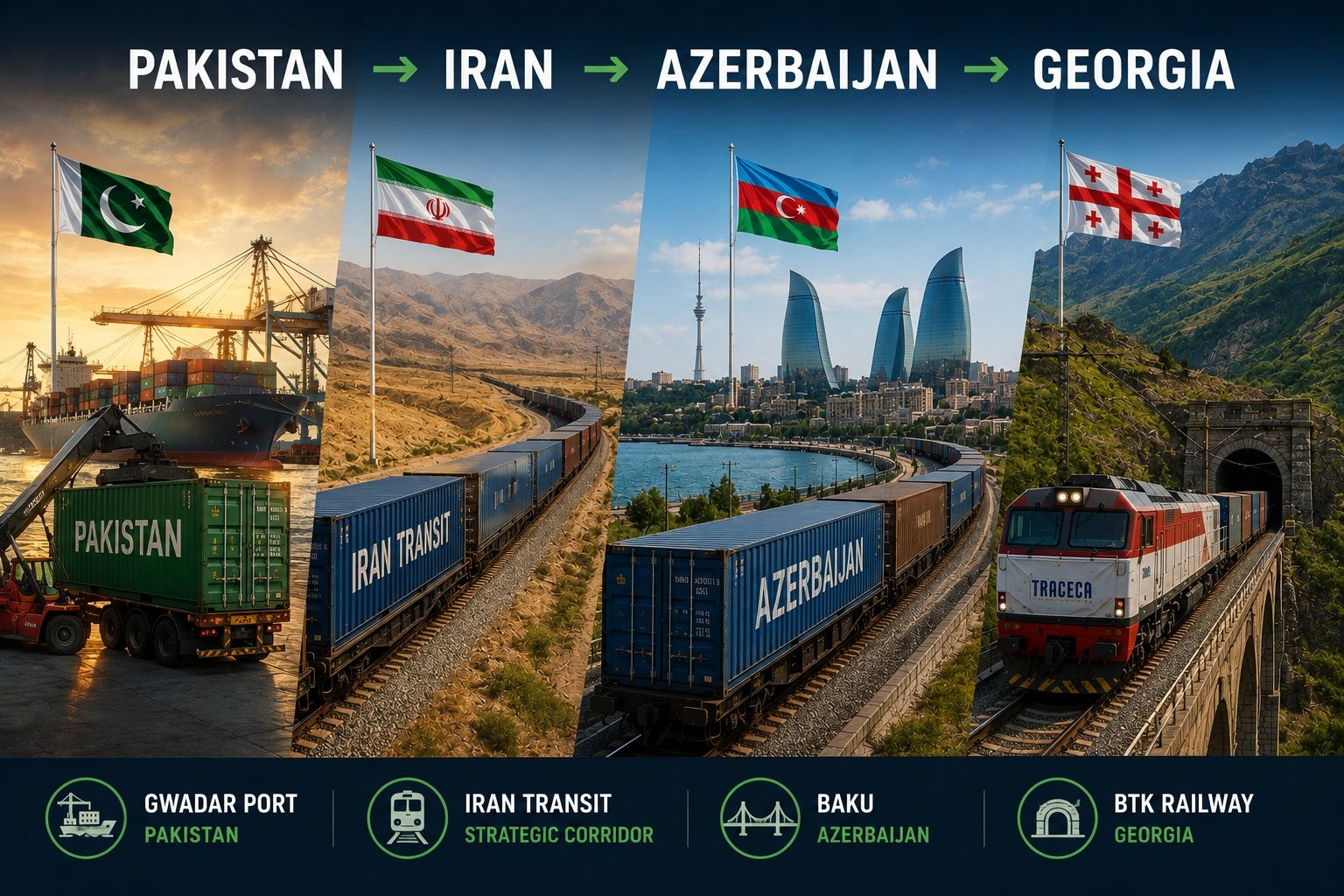
Himalayan Eagle, Caucasian Panther and Silk Road
2026-06-05
Pakistan's economy is one of the largest in South Asia. With
a population of over 240 million, the country's main sectors of economy are
agriculture (cotton, wheat, rice, sugarcane), industry (textiles are the
largest export sector) and services (banking, telecommunications and IT
sectors).
Current situation
In recent years, Pakistan has been facing economic
difficulties: high inflation, external debt and a decrease in foreign exchange
reserves. However, in 2024–2026, the economy is on a path to relative
stabilization. According to the World Bank, economic growth is around 2.7–3%.
Main challenges
High public debt; energy problems; low exports compared to
the size of the economy; Climate risks and floods; the need to reduce poverty
and unemployment.
Prospects
If tax, trade and public sector reforms continue,
international organizations expect moderate economic growth in the coming
years. Of particular importance will be the growth of exports, foreign
investment and the development of the IT sector.
Transit route of the future
The most realistic and economically profitable route for
Pakistan runs through Iran and Azerbaijan: Pakistan → Iran →
Azerbaijan → Georgia → Europe.
This route is based on the South-West Transport Corridor,
which connects South Asia, Iran, Azerbaijan and Georgia, and then via the Black
Sea to Europe.
Caucasian Panther
Benefits for Georgia: Increased throughput and transit
revenues of the ports of Poti and Batumi; Expanding trade with Pakistan and
Central Asia; Strengthening Georgia’s role as a key hub in the “Middle
Corridor.”
Strategic Benefits
Pakistan gains direct access to Black Sea ports; Caucasus
Panther Georgia becomes a hub connecting South Asia and Europe; Increasing
cargo turnover at the ports of Poti and Batumi/Anaklia; Decreasing dependence
on sea routes.
Pakistan (Karachi / Lahore / Quetta)
▼ ~
2 - 4 days
Iran (Zahedan →
Tehran → Tabriz)
▼ ~
3 - 5 days
Azerbaijan (Baku)
▼ ~
1 - 2 days
Georgia (Tbilisi →
Poti / Batumi / Akhalkalaki)
▼ ~
1 day
Black Sea →
Europe
Total transit time: 7 - 12 days (depending on the type of
cargo and customs processes).
Let's compare the land-transit route and the classic sea
route:
1) Land route
Pakistan →
Iran → Azerbaijan → Georgia → Black Sea → Europe
Time: 7 - 12 days
Features:
● Multimodal (train + trailer);
● Crossing many borders;
● Medium/high risk of delays (customs, politics)
Advantages:
○
Much faster than sea
○ “Short cut” to Europe
○
Fast distribution via Black Sea ports (Poti/Batumi)
Disadvantages:
□ Complex logistics (3 countries + customs)
□ Often more expensive per ton
□ Infrastructure dependent
2) Sea route
Pakistan (Karachi) →
Arabian Sea → Indian
Ocean → Suez Canal
(Egypt) →
Mediterranean Sea →
Europe (Italy / Greece / Germany)
Time: 20 – 35 days (sometimes 40+)
Features:
● Completely sea-based
● Ideal for large volume cargo
● Most stable global route
Advantages:
○
Cheaper for large cargo
○
High capacity (bulk container shipping)
○
Less Border problems
Disadvantages:
□ Very slow
□ Dependent on the Suez Canal and global crises
□ Long way to Europe
Direct comparison
Factor
● Land corridor | ○
Sea route
Time
● 7–12 days | ○
20–35 days
Cost
● Medium/high | ○
Low
Capacity
● Medium | ○
Very high
Risk
● Customs/political | ○
Ports/channel
Speed
● High | ○
Low
Stability
● Medium | ○
High
Conclusion: If the goal is speed, the land corridor through Georgia is better. If the goal is cheap and massive transportation, the sea route is better.
Author: Zurab Maghradze
Sources: worldbank.org; worldbank.org;
transit.gov.az; osw.waw.pl; sofmar.ge;
mincom.gov.az; president.az